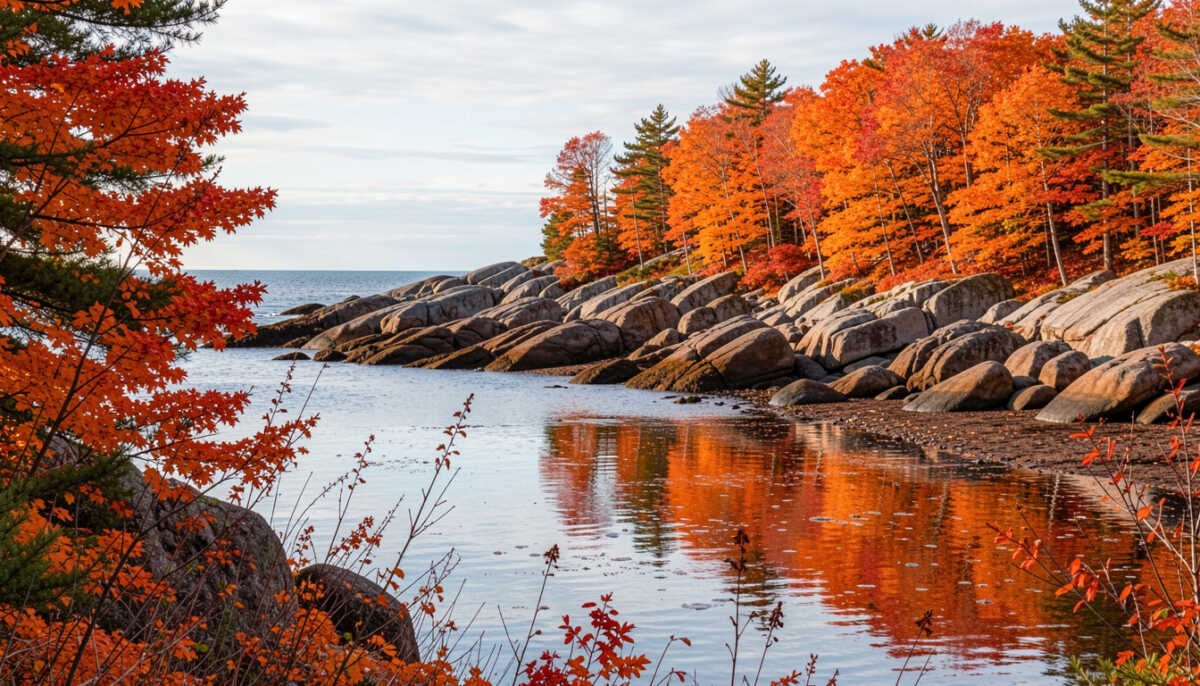
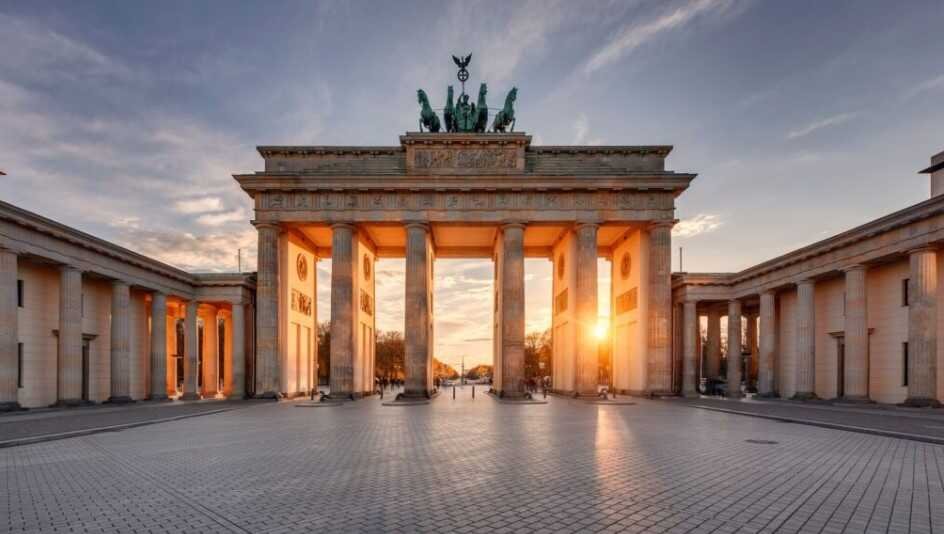
Germany is a country where history, architecture, and culture come together in remarkable ways. From magnificent castles and medieval city gates to historic monuments and world-famous cathedrals, the country offers countless places that tell fascinating stories about its past. Whether you enjoy exploring ancient architecture, learning about European history, or photographing beautiful destinations, Germany has something special to offer. Some landmarks represent the power of medieval kingdoms, while others remind visitors of important events that shaped modern Europe. Walking through these historic places gives you an opportunity to understand Germany beyond its modern cities and beautiful landscapes. In this guide, we will explore 15 of the best landmarks in Germany that deserve a place on your travel itinerary. Each destination offers something different, from impressive architecture to unforgettable historical experiences.
1. Brandenburg Gate – Berlin's Most Iconic Historic Monument
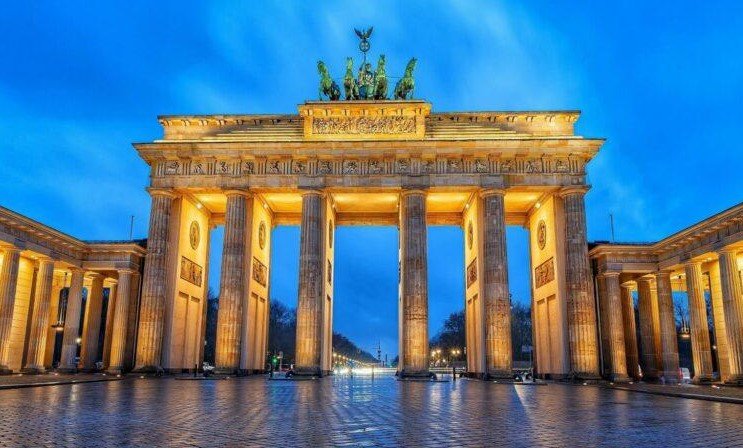
The Brandenburg Gate is one of the most recognizable landmarks in Germany and a must-visit attraction for anyone travelling to Berlin. Located in the heart of the German capital, this impressive monument represents an important part of the country’s political and cultural history.
The gate was constructed between 1788 and 1791 under the direction of Prussian King Frederick William II. Designed by architect Carl Gotthard Langhans, its architecture was inspired by the monumental entrance to the Acropolis in Athens. The structure features impressive sandstone columns and a famous sculpture called the Quadriga, which shows a chariot drawn by four horses.
However, the Brandenburg Gate is much more than an architectural attraction. During the Cold War, it became closely associated with the division of Berlin into East and West. When the Berlin Wall fell in 1989, thousands of people gathered around the monument to celebrate. Since then, it has become a powerful symbol of German reunification, peace, and freedom.
Admire the impressive neoclassical architecture and sandstone columns.
Take photographs of the famous Quadriga sculpture.
Explore Pariser Platz, the historic square in front of the monument.
Visit the nearby Holocaust Memorial to learn about an important part of European history.
Walk towards the Reichstag Building and enjoy the surrounding historic attractions.
- Best Time to Visit: Early morning is ideal for photography and a quieter experience. Evening is another excellent time to see the monument beautifully illuminated.
- Location: Pariser Platz, Berlin, Germany.
- Entry Fee: Free to visit the outdoor monument.
- Official Website: Visit Berlin – Brandenburg Gate
2. Cologne Cathedral – A Magnificent Gothic Architectural Masterpiece
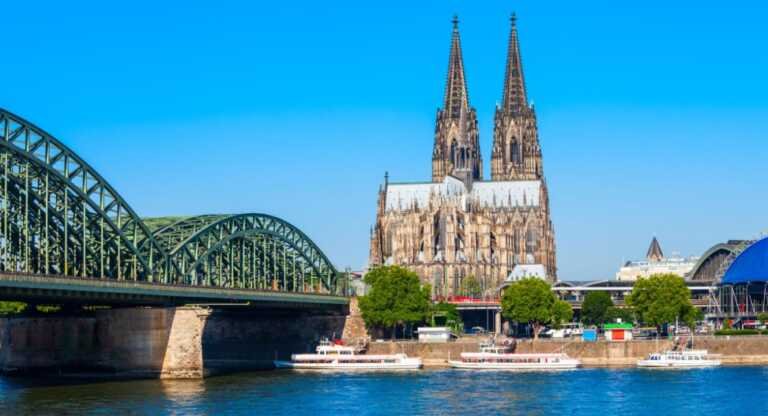
Cologne Cathedral, locally known as Kölner Dom, is one of the most spectacular religious landmarks in Europe. Located in the centre of Cologne, this enormous Gothic cathedral attracts visitors with its extraordinary architecture, detailed stonework, and centuries-old history.
Construction began in 1248, but completing such a massive architectural project took several centuries. Work was interrupted for a long period before construction resumed in the 19th century. The cathedral was finally completed in 1880, making it one of the most remarkable examples of Gothic architecture in Germany.
One of the cathedral’s most impressive features is its twin towers, which dominate the surrounding city skyline. Inside, visitors can admire beautiful stained-glass windows, decorated columns, religious artworks, and the famous Shrine of the Three Kings. The cathedral also has an impressive interior that reflects the craftsmanship of different historical periods.
Cologne Cathedral is recognized as a UNESCO World Heritage Site because of its outstanding cultural and architectural importance. It is not simply a place of worship; it is also a valuable part of Germany’s religious heritage and European history.
Explore the magnificent Gothic interior and its impressive architecture.
Admire the colourful medieval and modern stained-glass windows.
See the Shrine of the Three Kings, one of the cathedral’s most famous treasures.
Enjoy views of the cathedral from the nearby Hohenzollern Bridge.
Explore Cologne’s Old Town, restaurants, and riverside walking areas.
- Best Time to Visit: Spring and early autumn are excellent seasons for exploring Cologne. Visiting early in the day can provide a quieter experience.
- Location: Domkloster 4, Cologne, Germany.
- Entry Fee: The main cathedral and tourist areas may have different admission arrangements. Check current visitor information before travelling. Special areas and tower access may require tickets.
- Official Website: Cologne Cathedral – Official Visitor Information
3. Neuschwanstein Castle – Germany's Famous Fairytale Castle
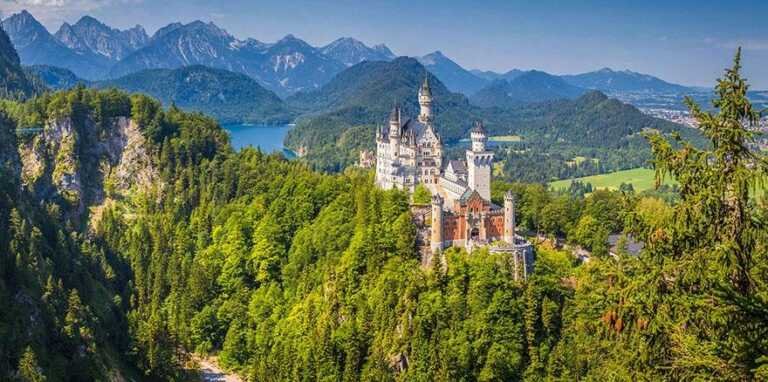
If you are looking for a historic landmark that looks like something from a fairytale, Neuschwanstein Castle should be high on your Germany travel list. Surrounded by mountains, forests, and beautiful Bavarian scenery, this castle is among the country’s most photographed attractions.
Neuschwanstein Castle is located near the village of Hohenschwangau in Bavaria. It was commissioned by King Ludwig II in the 19th century as a private royal retreat. Construction began in 1869, although the castle was never fully completed according to the original plans.
The castle’s architecture combines Romanesque, Gothic, and Byzantine-inspired elements. Its impressive towers, decorative rooms, and mountain setting create a unique atmosphere that attracts visitors from around the world.
One interesting detail is that Neuschwanstein Castle became an inspiration for the famous fairytale-style castle imagery associated with Disney. However, its real history is even more fascinating. King Ludwig II wanted to create a romantic retreat inspired by medieval legends, German literature, and the operas of composer Richard Wagner.
Today, visitors can explore selected interior rooms through guided tours and enjoy spectacular views of the surrounding Bavarian Alps.
Explore the castle’s impressive exterior and beautiful towers.
Join a guided tour to discover the royal rooms and interior decorations.
Visit Marienbrücke, a famous viewpoint offering fantastic views of the castle.
Explore the nearby Hohenschwangau village.
Enjoy the surrounding mountain scenery and beautiful walking routes.
- Best Time to Visit: Late spring, summer, and early autumn are popular times to visit. Winter offers a different atmosphere, with snow-covered scenery when weather conditions allow.
- Location: Neuschwansteinstraße 20, Schwangau, Bavaria, Germany.
- Entry Fee: Paid admission. Guided tours and advance reservations are important, particularly during busy travel seasons.
- Official Website: Neuschwanstein Castle – Official Ticket and Visitor Information
4. Reichstag Building – A Historic Symbol of German Democracy
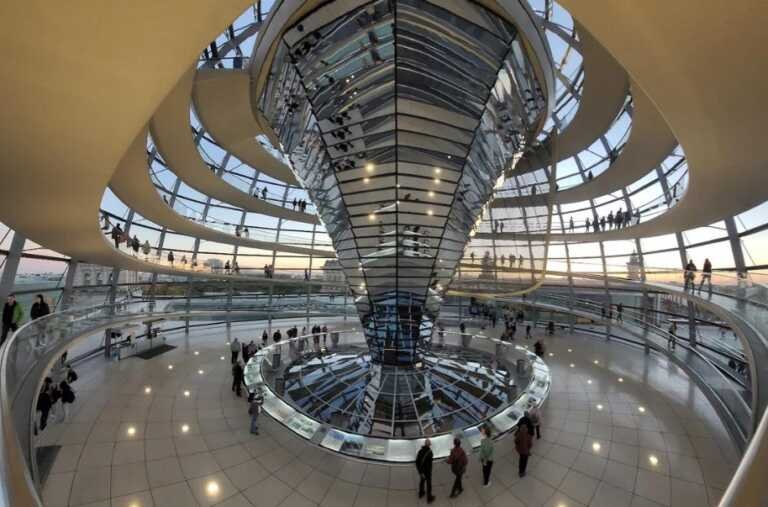
The Reichstag Building is another important historic landmark in Berlin. It is especially interesting because it combines traditional German architecture with modern design. Today, it serves as the home of the German parliament, known as the Bundestag.
The original building was opened in 1894 and designed by architect Paul Wallot. It became an important centre of German political life. However, the building experienced significant damage during the 20th century, including the famous Reichstag fire in 1933 and destruction during the Second World War.
After German reunification, the building underwent a major renovation led by British architect Norman Foster. One of the most noticeable additions was its modern glass dome, which has become a popular attraction for visitors.
The glass dome is particularly fascinating because it represents transparency in democratic government. Visitors can walk along its spiral pathway and enjoy panoramic views across Berlin. From the top, you can see several famous attractions and government buildings.
The Reichstag is a wonderful destination for travellers interested in architecture, politics, and modern German history.
Explore the famous modern glass dome.
Enjoy panoramic views of Berlin from the rooftop terrace.
Learn about the building’s historical importance.
Explore the surrounding government district.
Visit the nearby Brandenburg Gate and Tiergarten Park.
- Best Time to Visit: Spring and summer offer pleasant weather for exploring the surrounding area. Sunset can be a beautiful time to enjoy the city views from the dome.
- Location: Platz der Republik 1, Berlin, Germany.
- Entry Fee: Visits to the dome and rooftop terrace are free, but advance registration is required. Access arrangements can change, so check before visiting.
5. Heidelberg Castle – A Beautiful Historic Castle Overlooking the City
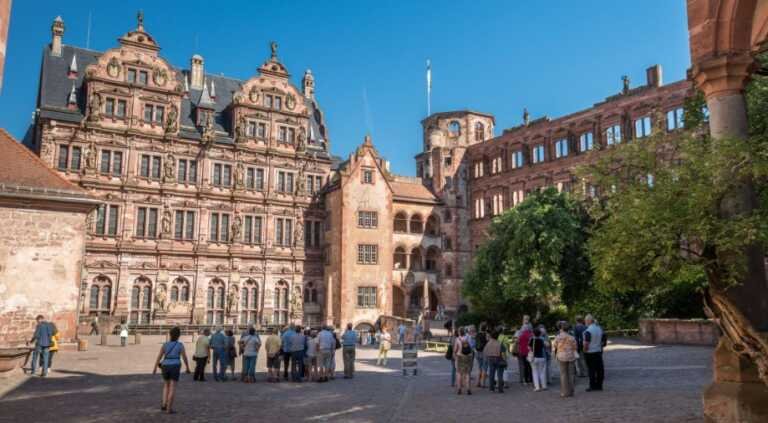
Heidelberg Castle is one of Germany’s most attractive historic landmarks, combining Renaissance architecture, romantic ruins, and beautiful natural scenery. Located on a hillside overlooking Heidelberg’s Old Town, the castle offers some of the most memorable views in southwestern Germany.
The castle’s history goes back to the medieval period. Over time, it developed from a fortified residence into an impressive palace complex used by the rulers of the Electoral Palatinate. During the 17th century, it suffered serious damage during conflicts involving French troops. Later, lightning strikes and further destruction contributed to its ruined condition.
Despite its damaged appearance, Heidelberg Castle remains an important symbol of German history and architecture. Its surviving buildings showcase different architectural styles, including Gothic and Renaissance elements.
One of the most interesting attractions inside the castle grounds is the Great Barrel, known as the Heidelberg Tun. This enormous historic wine barrel is a popular feature among visitors. The castle also offers beautiful viewpoints overlooking the Neckar River, Heidelberg’s Old Bridge, and the historic town centre.
For travellers who enjoy history and photography, Heidelberg Castle provides an excellent combination of both.
Explore the historic castle courtyard and surviving architectural structures.
Visit the Heidelberg Tun, the famous giant wine barrel.
Enjoy beautiful views of Heidelberg’s Old Town.
Walk through the castle gardens and surrounding grounds.
Explore the nearby Old Bridge and historic streets.
- Best Time to Visit: April to October is an excellent period for sightseeing and photography. Spring brings fresh greenery, while autumn creates beautiful colours around the castle.
- Location: Schlosshof 1, Heidelberg, Germany.
- Entry Fee: Admission to the castle grounds and selected attractions is ticketed. Check the official website for current ticket combinations and guided tour information.
- Official Website: Heidelberg Castle – Official Visitor Information
6. Aachen Cathedral – A Historic Masterpiece of European Architecture
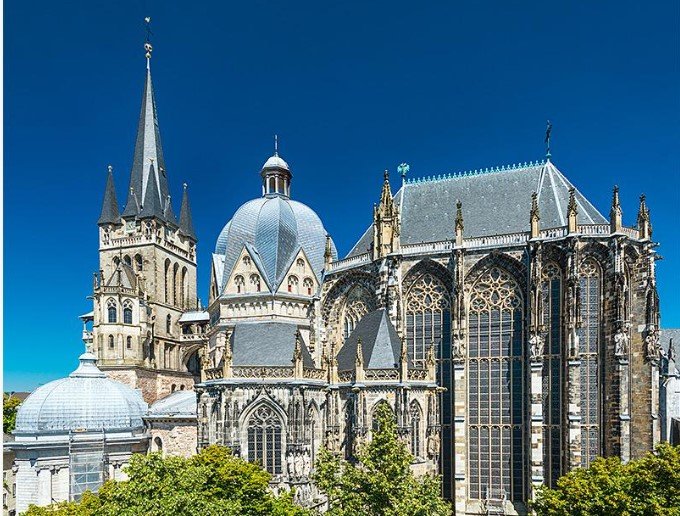
Aachen Cathedral is one of the most historically significant religious landmarks in Germany. Located in the western German city of Aachen, this impressive cathedral is famous for its extraordinary architecture and connection to Charlemagne, one of the most influential rulers in European history.
The cathedral was originally built during the late 8th and early 9th centuries under the direction of Charlemagne. Its central Palatine Chapel features a distinctive octagonal design inspired by earlier Byzantine architecture. Over the centuries, additional structures and decorations were added, creating a fascinating combination of architectural styles.
Aachen Cathedral also played an important role in European royal history. For centuries, it was used for the coronation of German kings. This connection makes it particularly interesting for visitors who want to understand the political and religious history of medieval Europe.
Inside, visitors can admire beautiful mosaics, historic decorations, and the famous Shrine of Charlemagne. The cathedral became Germany’s first UNESCO World Heritage Site in 1978.
Explore the impressive Palatine Chapel.
Admire the colourful mosaics and historic interior decorations.
Visit the Shrine of Charlemagne.
Discover the cathedral’s treasury and religious artefacts.
Walk around Aachen’s historic Old Town.
- Best Time to Visit: Spring and early autumn are excellent seasons for exploring Aachen and its historic attractions.
- Location: Domhof, Aachen, Germany.
- Entry Fee: General cathedral access and treasury visits may have different admission arrangements. Check current visitor information.
7. Würzburg Residence – A Magnificent Baroque Palace
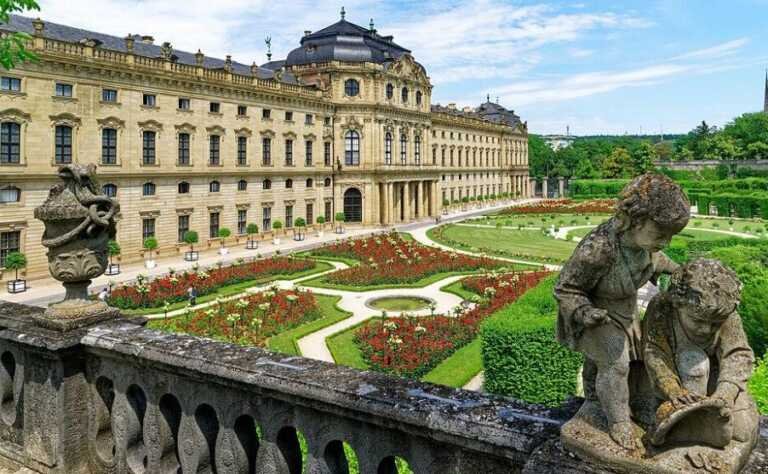
The Würzburg Residence is one of Germany’s most beautiful historic palaces and an outstanding example of Baroque architecture. Located in the city of Würzburg in Bavaria, this magnificent building is famous for its impressive rooms, artistic decorations, and carefully designed gardens.
Construction began in 1720 under the direction of the Prince-Bishops of Würzburg. Several talented architects and artists contributed to the project, including Balthasar Neumann, who played a major role in designing the palace.
One of the most remarkable features is the grand staircase, which leads visitors towards a spectacular ceiling fresco created by Italian artist Giovanni Battista Tiepolo. The artwork is considered one of the largest ceiling frescoes in the world.
The palace also includes beautifully decorated rooms, an impressive Imperial Hall, and the elegant Court Garden. These features make the Würzburg Residence a wonderful destination for travellers interested in European royal history and artistic heritage.
The residence was designated a UNESCO World Heritage Site in 1981.
Explore the grand staircase and its famous ceiling fresco.
Admire the beautifully decorated Imperial Hall.
Visit the elegant palace rooms.
Walk through the peaceful Court Garden.
Discover the surrounding historic city centre.
- Best Time to Visit: April to October is particularly pleasant for exploring the palace gardens and surrounding attractions.
- Location: Residenzplatz 2, Würzburg, Bavaria, Germany.
- Entry Fee: Paid admission for palace interiors. Garden access is generally free.
8. Holstentor – The Famous Medieval City Gate
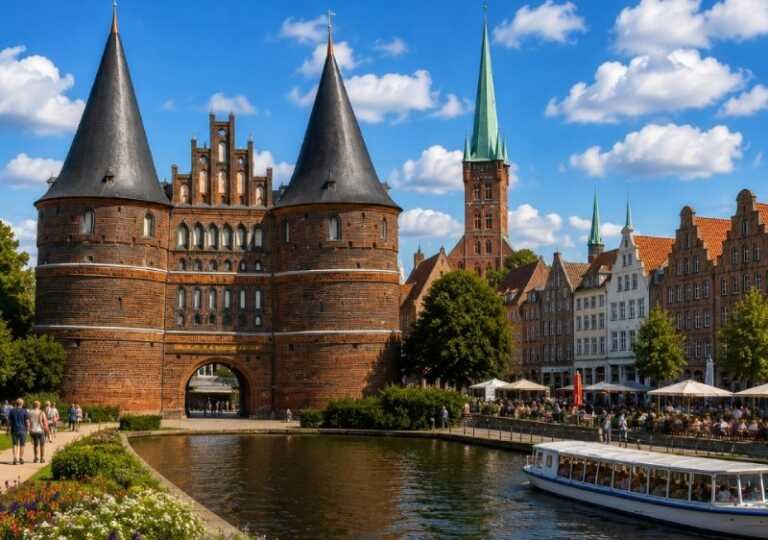
Holstentor is one of the most recognizable medieval landmarks in northern Germany. Located in Lübeck, this impressive brick city gate is a reminder of the city’s important trading history and its influence during the Hanseatic League period.
Built between 1464 and 1478, Holstentor served as part of Lübeck’s historic defensive system. Its distinctive design features two rounded towers connected by a central entrance. The slightly curved appearance of the structure gives it a unique architectural character.
Lübeck was once one of the most powerful trading cities in northern Europe. As an important member of the Hanseatic League, it played a major role in commercial connections between European cities. Holstentor became a symbol of this prosperity and the city’s historic importance.
Today, the gate houses a museum where visitors can discover Lübeck’s medieval history, trade networks, and historical development.
The surrounding Old Town is also worth exploring, with its traditional brick buildings, narrow streets, churches, and historic squares.
Photograph the impressive medieval gate from different angles.
Visit the Holstentor Museum.
Explore Lübeck’s UNESCO-listed Old Town.
Discover the city’s historic merchant buildings.
Enjoy a walk along the nearby waterways.
- Best Time to Visit: May to September offers pleasant weather for walking around Lübeck and exploring its historic streets.
- Location: Holstentorplatz, Lübeck, Germany.
- Entry Fee: The exterior can be viewed free of charge. Museum admission requires a ticket.
9. Porta Nigra – An Extraordinary Roman Monument
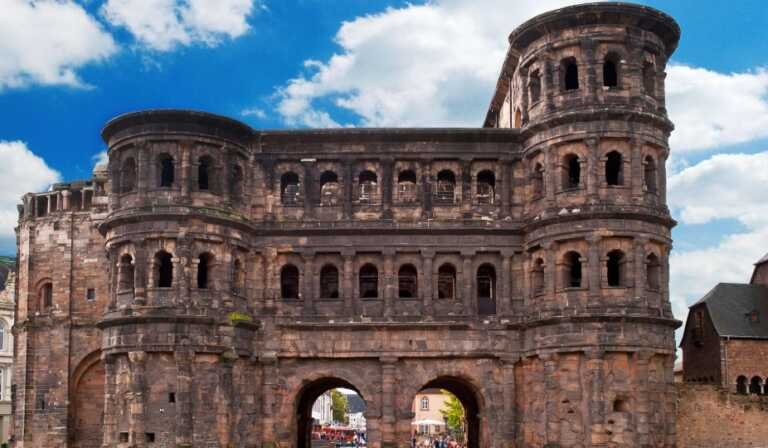
Porta Nigra is one of the most impressive surviving Roman monuments in Germany. Located in Trier, one of the country’s oldest cities, this enormous stone gateway offers visitors a fascinating look into the Roman Empire’s presence in the region.
The monument was constructed around the late 2nd century AD using large blocks of sandstone. It originally formed part of the Roman city’s defensive wall and served as an important entrance to the settlement.
Its name, meaning “Black Gate”, comes from the dark appearance that developed on its sandstone surfaces over many centuries. Unlike many ancient Roman structures that disappeared or were heavily damaged, Porta Nigra has survived remarkably well.
During the Middle Ages, the gateway was converted into a church complex. Later, Napoleon ordered the removal of the church additions, helping restore its earlier Roman appearance.
Today, visitors can explore different levels of the monument and learn about its Roman and medieval history. Porta Nigra is part of Trier’s UNESCO-listed Roman Monuments, Cathedral of St Peter and Church of Our Lady.
Admire the enormous Roman stone construction.
Explore the different levels of the historic gateway.
Learn about Roman Trier through historical exhibitions.
Visit nearby Roman attractions in the city.
Walk through Trier’s beautiful historic centre.
- Best Time to Visit: Spring and summer are excellent for exploring Trier’s outdoor Roman landmarks.
- Location: Porta-Nigra-Platz, Trier, Germany.
- Entry Fee: Paid admission applies to the interior visitor experience. Check current ticket information.
- Official Website: Porta Nigra – Trier Tourism
10. Charlottenburg Palace – A Beautiful Royal Palace in Berlin
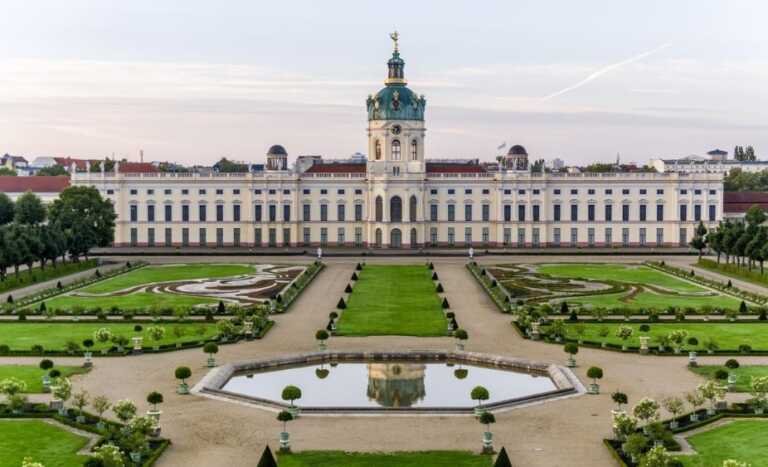
Charlottenburg Palace is one of the most beautiful royal landmarks in Germany. Located in Berlin, this impressive palace offers a glimpse into the lifestyle, architecture, and artistic interests of the Prussian royal family.
The palace was originally built in the late 17th century as a summer residence for Sophie Charlotte, the wife of Elector Frederick III of Brandenburg. It was later expanded and decorated by successive Prussian rulers, creating the magnificent palace complex visitors see today.
Its architecture combines Baroque and Rococo styles, featuring elegant halls, decorative ceilings, impressive furniture, and beautiful artwork. The palace gardens are equally attractive, offering peaceful walking areas and carefully maintained landscapes.
One of the highlights is the New Wing, which contains impressive state apartments and ceremonial rooms. Visitors can also explore the Old Palace to discover historical royal interiors and collections.
Charlottenburg Palace is an excellent destination for travellers who want to experience Germany’s royal heritage without leaving Berlin.
Explore the historic royal apartments.
Admire the beautiful Baroque and Rococo interiors.
Walk through the palace gardens.
Visit the New Wing and its impressive ceremonial rooms.
Discover the nearby museums and historic attractions.
- Best Time to Visit: Late spring and summer are ideal for enjoying the palace gardens. Winter offers a quieter atmosphere for exploring the historic interiors.
- Location: Spandauer Damm 10–22, Berlin, Germany.
- Entry Fee: Palace interiors require paid admission. Garden access is generally free.
11. Hohenzollern Castle – A Spectacular Hilltop Castle
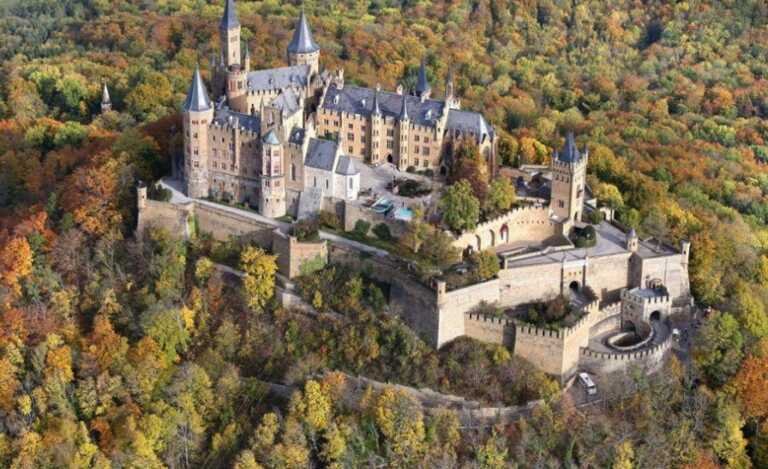
Hohenzollern Castle is one of the most impressive castles in Germany, offering visitors a wonderful combination of royal history, beautiful architecture, and breathtaking mountain scenery. Located on Mount Hohenzollern in Baden-Württemberg, the castle stands high above the surrounding countryside.
The castle is closely connected to the Hohenzollern dynasty, a powerful royal family that played an important role in German and European history. The current structure is the third castle built on this mountain. Construction began in 1850 under the direction of King Frederick William IV of Prussia, and it was completed in 1867.
Its impressive towers, decorative halls, fortified walls, and beautiful courtyard create a remarkable medieval appearance. Visitors can explore selected rooms and discover historical collections connected to the Hohenzollern family.
The hilltop location is another major attraction. On clear days, visitors can enjoy wonderful views of the Swabian Alps and surrounding landscapes.
Explore the historic castle courtyard and impressive towers.
Discover royal family collections and historical artefacts.
Admire the beautiful castle interiors.
Enjoy panoramic views of the surrounding countryside.
Take photographs of the castle from nearby viewpoints.
- Best Time to Visit: May to October is ideal for enjoying the surrounding scenery. Autumn also offers beautiful colours.
- Location: Bisingen, Baden-Württemberg, Germany.
- Entry Fee: Paid admission. Check current ticket and shuttle information before visiting.
- Official Website: Hohenzollern Castle – Official Website
12. Sanssouci Palace – The Elegant Summer Palace of Frederick the Great
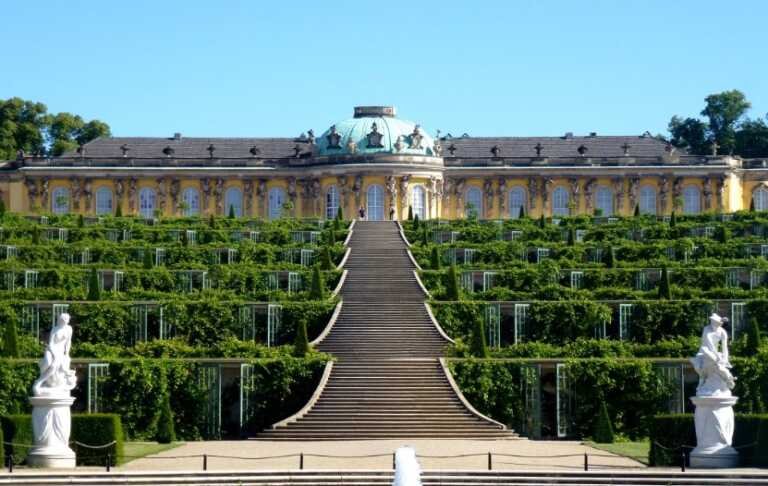
Sanssouci Palace is one of Germany’s most beautiful historic royal residences. Located in Potsdam, near Berlin, this elegant palace is famous for its Rococo architecture, terraced gardens, and connection to Frederick the Great, King of Prussia.
The palace was constructed between 1745 and 1747 as a private summer residence for Frederick the Great. Unlike larger royal palaces designed for formal ceremonies, Sanssouci was intended to provide a peaceful place where the king could relax, enjoy music, and spend time with intellectuals.
The name Sanssouci comes from French and means “without worries.” This name reflects the relaxed atmosphere that Frederick wanted to create.
One of the palace’s most distinctive features is its beautiful terraced vineyard garden. The landscaped grounds include fountains, sculptures, historic buildings, and peaceful walking paths. The palace itself features elegant rooms decorated in the Rococo style.
Sanssouci Palace and its surrounding parks form part of the UNESCO-listed Palaces and Parks of Potsdam and Berlin.
Explore the magnificent Rococo palace interiors.
Walk through the famous terraced vineyard gardens.
Visit the beautiful Sanssouci Park.
Discover the historic fountains and sculptures.
Explore other royal buildings within the palace grounds.
- Best Time to Visit: April to September is ideal for enjoying the gardens and outdoor attractions.
- Location: Maulbeerallee, Potsdam, Germany.
- Entry Fee: Palace admission requires a ticket. Some outdoor park areas can be explored free of charge.
- Official Website: Sanssouci Palace – Official Website
13. Imperial Castle of Nuremberg – A Powerful Symbol of Medieval Germany
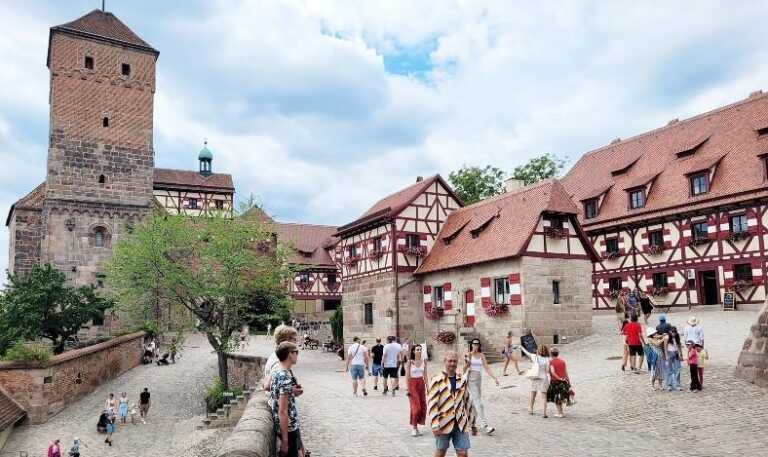
The Imperial Castle of Nuremberg, also known as Kaiserburg, is one of the most important medieval landmarks in Germany. Standing on a rocky hill above Nuremberg’s Old Town, this impressive fortress offers visitors a fascinating look into the country’s medieval political history.
The castle developed over several centuries and became an important imperial residence during the Holy Roman Empire. German kings and emperors frequently stayed here while travelling throughout their territories.
The castle complex includes historic towers, fortified walls, courtyards, and residential buildings. Its strategic hilltop position also made it an important defensive structure.
One of the highlights is the Sinwell Tower, which provides beautiful views across Nuremberg. Visitors can also explore the Imperial Castle Museum to learn about medieval weapons, royal life, and the castle’s development.
After exploring the castle, travellers can walk through Nuremberg’s historic Old Town, where traditional buildings, churches, and charming streets create a memorable atmosphere.
Explore the medieval castle courtyard.
Visit the Imperial Castle Museum.
Climb or view the historic Sinwell Tower.
Discover the castle’s defensive architecture.
Enjoy panoramic views of Nuremberg’s Old Town.
- Best Time to Visit: April to October is a great period for sightseeing and exploring the castle grounds.
- Location: Auf der Burg 13, Nuremberg, Bavaria, Germany.
- Entry Fee: Paid admission for selected museum and castle attractions.
- Official Website: Imperial Castle of Nuremberg – Official Information
14. Monument to the Battle of the Nations – A Monument to European History
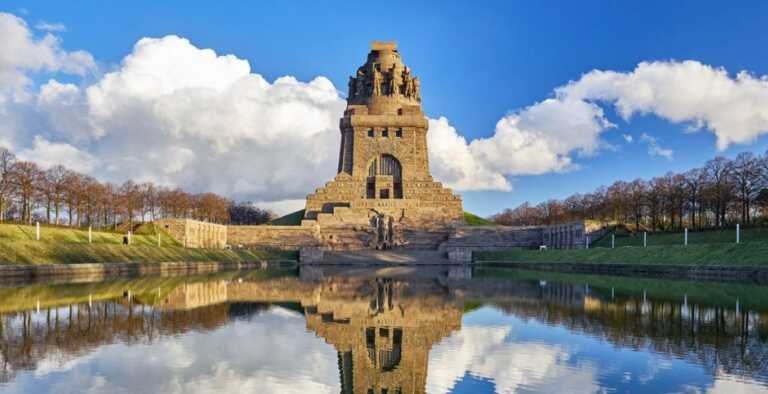
The Monument to the Battle of the Nations, known in German as Völkerschlachtdenkmal, is one of the largest and most impressive historic monuments in Germany. Located in Leipzig, it commemorates the Battle of Leipzig in 1813, one of the most important battles during the Napoleonic Wars.
The battle involved Napoleon’s French forces and a coalition of European armies, including troops from Russia, Prussia, Austria, and Sweden. The defeat of Napoleon’s army marked a major turning point in European history.
The monument was officially opened in 1913, marking the 100th anniversary of the battle. Its enormous stone structure, impressive sculptures, and symbolic decorations make it a remarkable example of early 20th-century memorial architecture.
Visitors can explore the interior halls and learn about the battle through historical displays. Those who climb to the upper viewing platforms can enjoy impressive views across Leipzig and the surrounding area.
Admire the enormous stone monument and its sculptures.
Explore the Hall of Fame and interior spaces.
Learn about the Battle of Leipzig.
Climb to the viewing platform for panoramic city views.
Visit the surrounding memorial grounds and reflection pool.
- Best Time to Visit: Spring and summer are excellent for exploring the outdoor areas and enjoying clear city views.
- Location: Straße des 18. Oktober 100, Leipzig, Germany.
- Entry Fee: Paid admission for the monument and viewing areas.
- Official Website: Monument to the Battle of the Nations – Leipzig Tourism
15. Marksburg Castle – A Remarkably Preserved Medieval Castle
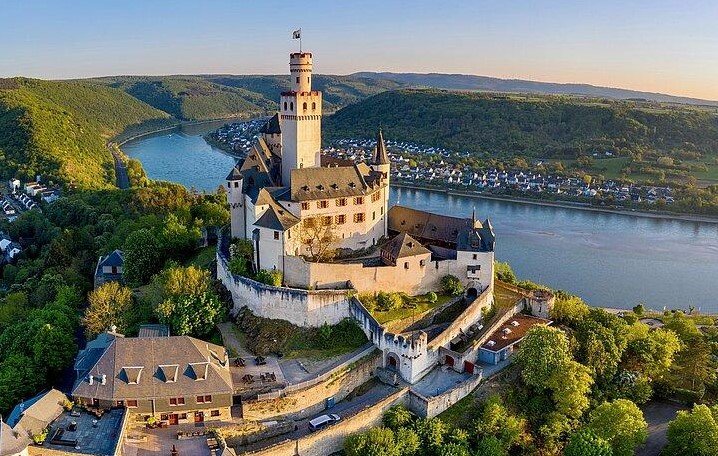
Marksburg Castle is one of the most fascinating medieval castles in Germany. Located above the small town of Braubach along the Rhine River, this historic fortress is particularly important because it has never been destroyed by war.
The castle’s origins date back to the early 12th century, although it was expanded and modified over the following centuries. Its position on a hill overlooking the Rhine made it an important defensive structure during the medieval period.
Unlike many other German castles that exist mainly as romantic ruins, Marksburg has retained much of its original medieval character. Its stone towers, defensive walls, historic rooms, and traditional courtyard provide visitors with an authentic impression of medieval castle life.
Inside, visitors can explore rooms containing historical furniture, weapons, armour, and other objects connected to medieval life. Guided tours help explain how people lived and defended themselves inside the fortress.
The surrounding Rhine Valley is also a major attraction. The region is famous for its castles, vineyards, historic villages, and beautiful river scenery.
Join a guided tour of the medieval castle.
Explore the historic armoury and defensive structures.
Discover the traditional castle kitchen and living spaces.
Enjoy beautiful views of the Rhine Valley.
Explore the charming town of Braubach.
- Best Time to Visit: May to September is an excellent time to visit because of the pleasant weather and beautiful Rhine Valley scenery.
- Location: Marksburg, Braubach, Rhineland-Palatinate, Germany.
- Entry Fee: Paid admission through guided tours. Check the official website for current schedules.
- Official Website: Marksburg Castle – German Castles Association
Frequently Asked Questions (FAQs)
1. What is the most famous landmark in Germany?
Brandenburg Gate in Berlin is one of the most famous and historically important landmarks in Germany.
2. What are the best historic places to visit in Germany?
Some popular choices include Neuschwanstein Castle, Cologne Cathedral, Heidelberg Castle, and Aachen Cathedral.
3. Which German landmark is a UNESCO World Heritage Site?
Cologne Cathedral, Aachen Cathedral, and Würzburg Residence are among Germany’s famous UNESCO-listed landmarks.
4. What is the oldest landmark in Germany?
Porta Nigra in Trier is one of Germany’s best-preserved ancient Roman landmarks, dating back to the 2nd century AD.
5. Which castle in Germany is worth visiting?
Neuschwanstein Castle is a popular choice because of its fairytale-style architecture and beautiful mountain scenery.
6. What is the best time to visit historic landmarks in Germany?
Spring (April–June) and early autumn (September–October) are excellent times for sightseeing.
7. Are historic landmarks in Germany expensive to visit?
Not all of them. Some attractions, such as Brandenburg Gate, can be visited for free, while castles and museums usually charge admission.

I am Sabiq Hasan Rasel. Coffee with Travel, Recipes & Reviews is a cozy and engaging content space that blends a love of coffee with exciting travel experiences, delicious recipes, and honest reviews. It offers inspiration for coffee lovers who enjoy exploring new places, trying unique flavors, and discovering lifestyle tips along the way.