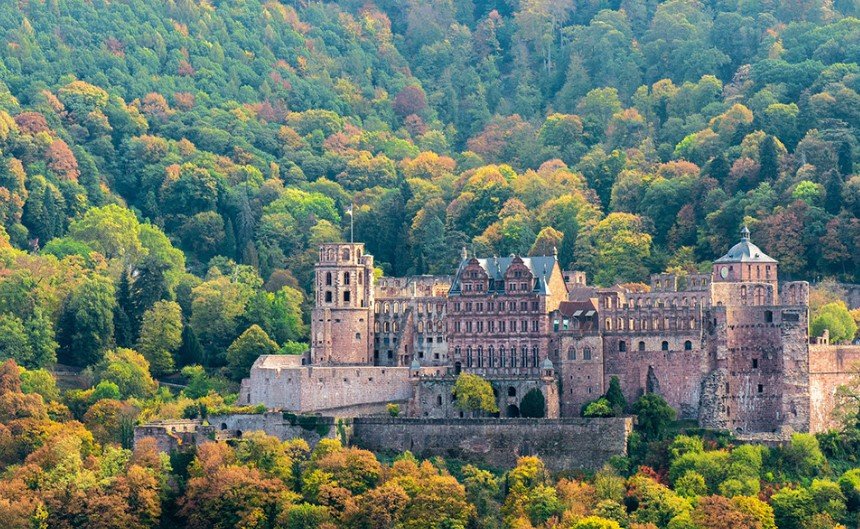
Germany is a wonderful destination for history lovers, architecture enthusiasts, and travellers who enjoy exploring beautiful historic places. From medieval fortresses standing on forest-covered hills to magnificent royal castles surrounded by mountains, the country has some of Europe’s most impressive historic landmarks. German castles are more than beautiful buildings. They tell stories of royal families, medieval life, powerful rulers, battles, cultural traditions, and architectural changes that shaped the country’s history. Some have survived for hundreds of years, while others were transformed into magnificent royal residences. Whether you are planning your first trip to Germany or simply looking for inspiration for your next European holiday, visiting these castles can make your journey unforgettable. In this guide, I have selected 15 of the best historic castles in Germany, considering their historical importance, architectural beauty, location, and visitor appeal. You will also find useful information about what makes each castle special and what to know before visiting.
1. Neuschwanstein Castle – Bavaria
Location: Schwangau, Bavaria, Southern Germany
Best for: Fairytale architecture, mountain scenery, photography, and royal history.
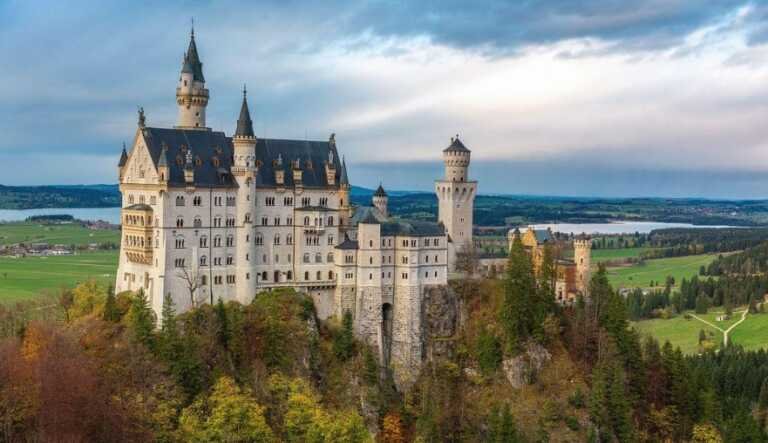
Neuschwanstein Castle is undoubtedly one of the most famous castles in Germany. Located in the beautiful Bavarian Alps near the town of Füssen, this magnificent building looks like something taken straight from a fairytale. Its white limestone walls, pointed towers, decorative balconies, and mountain surroundings attract visitors from across the world.
The castle was commissioned by King Ludwig II of Bavaria in 1869. He wanted to create a romantic royal retreat inspired by medieval legends and the operas of composer Richard Wagner. However, Ludwig II died in 1886 before the castle was completed.
Although Neuschwanstein looks like a medieval fortress, it is actually a 19th-century royal residence built in a historic architectural style. This makes it particularly interesting for visitors who want to understand the Romantic movement in European architecture.
One of the most memorable experiences is seeing the castle from Marienbrücke (Mary’s Bridge), which offers a spectacular view of the building and the surrounding landscape. Visitors can also explore the castle’s decorated interior through an organised guided tour.
Explore the castle’s impressive royal rooms during a guided tour.
Admire the beautiful views of the Bavarian Alps.
Visit Marienbrücke for a memorable castle photograph when the bridge is open.
Explore the nearby village of Hohenschwangau.
Enjoy the surrounding lakes, mountains, and walking areas.
- Best Time to Visit: May to October is popular for pleasant weather and mountain scenery. Winter also offers beautiful snowy views, although weather conditions may affect access to certain viewpoints.
- Visitor Tip: Book your admission ticket in advance because castle visits are organised into timed guided tours. Allow extra time to reach the entrance from the ticket area.
- For updated visitor information, visit the official Neuschwanstein Castle website
2. Burg Eltz – Rhineland-Palatinate
Location: Wierschem, Rhineland-Palatinate, Western Germany
Best for: Medieval architecture, peaceful natural surroundings, and authentic castle history.
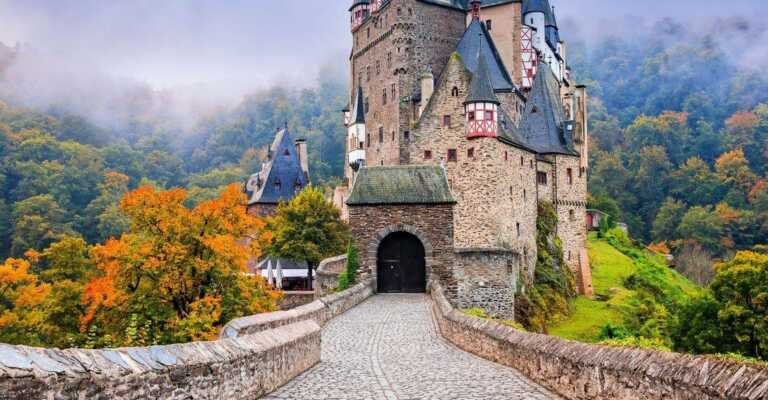
Burg Eltz is one of the most charming medieval castles in Germany. Hidden among the green forests of the Eifel region, this impressive hilltop castle looks remarkably different from many other European castles.
Unlike Neuschwanstein, which was built during the 19th century, Burg Eltz has genuine medieval origins dating back to the 12th century. Its location in a wooded valley above the Elzbach River gives it a distinctive appearance, making it a favourite destination for history lovers and photographers.
One of the most fascinating facts about Burg Eltz is its long family history. It has remained in the ownership of the same noble family for more than 850 years. Over time, different branches of the family developed their own residential sections, creating the castle’s unusual collection of towers, roofs, and architectural details.
The castle also offers a glimpse into medieval aristocratic life. Its historic rooms contain furniture, decorative objects, and collections that help visitors understand how noble families once lived.
The surrounding forest adds another reason to visit. Walking through the natural landscape towards the castle is an experience in itself, especially during autumn when the trees display beautiful seasonal colours.
Explore the medieval courtyard and impressive towers.
Join a guided tour to discover the castle’s historic rooms.
Admire the traditional architecture and historic collections.
Enjoy the forest scenery surrounding the castle.
Take photographs from the scenic approach to the castle.
- Best Time to Visit: Spring, summer, and early autumn are excellent seasons for exploring the surrounding landscape. Check seasonal opening dates before travelling.
- Visitor Tip: Wear comfortable walking shoes because reaching the castle involves walking along a path through the surrounding landscape. Check the official website for current access arrangements and guided tour information.
- For visitor details, see the official Burg Eltz website.
3. Wartburg Castle – Thuringia
Location: Eisenach, Thuringia, Central Germany
Best for: German history, medieval architecture, UNESCO heritage, and cultural exploration.
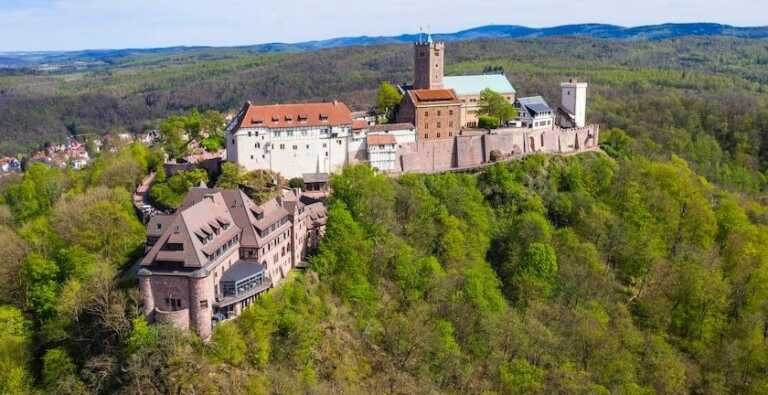
Wartburg Castle is one of Germany’s most historically significant castles. Standing on a hill overlooking the town of Eisenach, it has played an important role in German political, religious, and cultural history.
The castle dates back to the 11th century and is particularly famous for its connection with Martin Luther. In 1521, Luther sought refuge at Wartburg after being declared an outlaw following the Diet of Worms. During his stay, he translated the New Testament into German, helping make religious texts more accessible to ordinary people.
Wartburg is also associated with Saint Elisabeth of Hungary, who lived there during the 13th century. These connections make the castle much more than an architectural attraction.
The building combines medieval sections with later restorations, creating an impressive collection of historical architecture. Its grand halls, decorative interiors, and traditional courtyard provide visitors with a fascinating look at different periods of German history.
Wartburg Castle became a UNESCO World Heritage Site in 1999 because of its outstanding cultural and historical importance.
Explore the historic courtyard and castle buildings.
Visit the famous Luther Room.
Discover the castle’s exhibitions and historical collections.
Admire the impressive Romanesque architecture.
Enjoy panoramic views of the surrounding Thuringian Forest.
- Best Time to Visit: April to October is ideal for comfortable sightseeing and enjoying the surrounding scenery. Winter also has its own charm, especially when the castle and forest are covered in snow.
- Visitor Tip: Allow enough time to explore both the castle and its exhibitions. Check the guided tour schedule before arriving, as access to certain historic rooms may be organised through tours.
4. Hohenzollern Castle – Baden-Württemberg
Location: Near Hechingen, Baden-Württemberg, Southwestern Germany
Best for: Royal history, impressive architecture, mountain views, and photography.
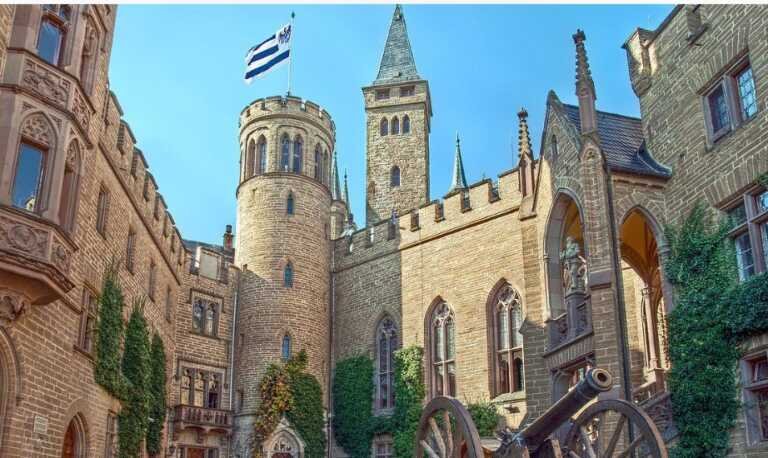
Hohenzollern Castle is another remarkable historic landmark that deserves a place on every Germany travel itinerary. Perched on top of Mount Hohenzollern, this magnificent castle offers breathtaking views of the surrounding countryside.
The castle is closely connected to the history of the House of Hohenzollern, one of the most influential royal dynasties in European history. The family produced the kings of Prussia and later the German emperors.
The present castle is actually the third structure built on this mountain. Its construction began in 1850 under the direction of King Frederick William IV of Prussia, and it was completed in 1867. The architecture combines Gothic Revival elements with impressive towers, fortified walls, and decorative details.
Walking through the castle feels like stepping into another period of European history. Visitors can discover royal rooms, historic furniture, family portraits, and collections that reflect the lifestyle of the Hohenzollern family.
The castle’s hilltop position is one of its greatest attractions. On clear days, visitors can enjoy wonderful views of the Swabian countryside. During winter, the castle can look particularly beautiful when surrounded by snow.
Explore the impressive castle courtyard and historic buildings.
Discover the royal rooms and historical collections.
Learn about the influential House of Hohenzollern.
Enjoy panoramic views from the castle grounds.
Take photographs of the castle’s impressive towers and architecture.
- Best Time to Visit: April to October is a good period for comfortable sightseeing. Winter is also attractive, particularly during special seasonal events.
- Visitor Tip: The castle is situated on a hill, so plan your journey carefully. Parking and shuttle services are available according to the visitor arrangements. Check the official website for seasonal opening times before visiting.
- For tickets, opening hours, and visitor information, visit the official Hohenzollern Castle website
5. Heidelberg Castle – Baden-Württemberg
Location: Heidelberg, Baden-Württemberg, Southwestern Germany
Best for: Historic ruins, romantic scenery, architecture, and city views.
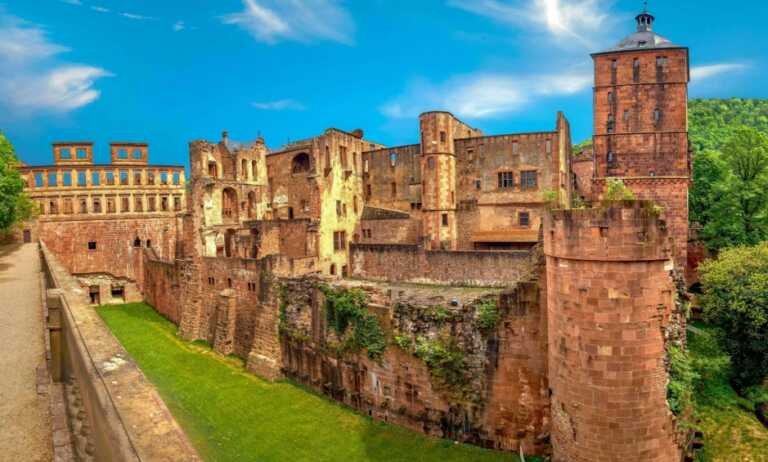
Heidelberg Castle is one of the most famous historic landmarks in Germany. Located on a hillside overlooking the beautiful city of Heidelberg and the Neckar River, this impressive castle attracts visitors with its romantic atmosphere and fascinating history.
The castle originally developed as a fortified residence around the beginning of the 14th century. Over the following centuries, it was expanded by the Palatine Electors and became an important royal residence in the region.
However, Heidelberg Castle experienced considerable damage during conflicts in the 17th century, particularly the Nine Years’ War. Lightning also caused a major fire in 1764. Although parts of the castle were never fully rebuilt, its remaining structures have become some of Germany’s most recognisable historic ruins.
One of the most interesting features is the Friedrich Building, which contains impressive sculptures and architectural details. Another popular attraction is the Great Heidelberg Tun, a gigantic historic wine barrel located inside the castle complex.
The castle gardens, known as the Hortus Palatinus, are also worth exploring. They offer beautiful views across Heidelberg and provide a peaceful place to appreciate the surrounding landscape.
For visitors interested in history, architecture, and photography, Heidelberg Castle is an excellent destination.
Explore the historic castle courtyard and surviving buildings.
See the famous Great Heidelberg Tun.
Discover the German Pharmacy Museum.
Walk through the beautiful castle gardens.
Enjoy panoramic views of Heidelberg’s Old Town and the Neckar River.
Learn about the history of the Palatine Electors.
- Best Time to Visit: April to October is ideal for enjoying the gardens and outdoor scenery. Spring and early autumn are particularly pleasant for sightseeing.
- Visitor Tip: You can reach the castle using Heidelberg’s funicular railway. The castle interiors are accessible through guided tours, so check the schedule before your visit.
- For current admission information and opening hours, visit the official Heidelberg Castle website
6. Schwerin Castle – Mecklenburg-Vorpommern
Location: Schwerin, Mecklenburg-Vorpommern, Northern Germany
Best for: Romantic architecture, royal history, lake scenery, and photography.
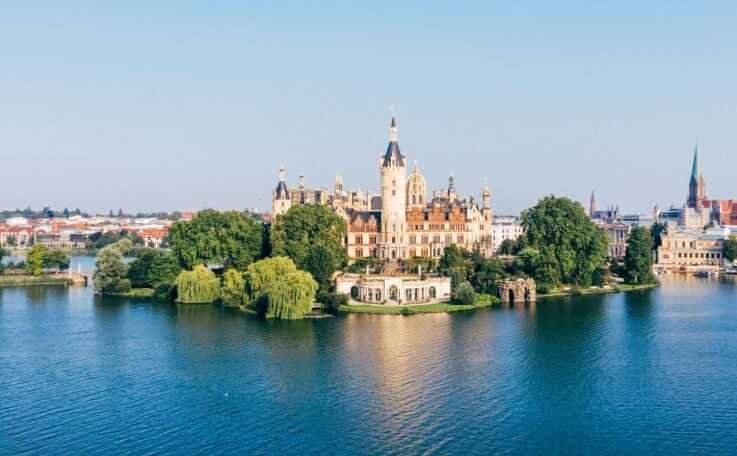
Schwerin Castle is one of the most beautiful historic castles in northern Germany. Situated on an island in Lake Schwerin, this magnificent palace is surrounded by water, gardens, and peaceful natural scenery. Its golden dome, decorative towers, and elegant architecture make it look like something from a fairytale.
The castle has a history stretching back many centuries. Its origins can be traced to a Slavic fortress established on the island around the 10th century. Over time, the site developed into a residence for the Dukes and Grand Dukes of Mecklenburg-Schwerin.
The present appearance of Schwerin Castle largely dates from the 19th century, when it underwent extensive reconstruction and expansion. Its architecture combines different European influences, including Renaissance and historicist styles.
Inside, visitors can explore beautifully decorated rooms, historic furniture, artwork, and exhibitions that explain the lives of the former ruling family. The throne room is particularly impressive because of its detailed decoration and luxurious appearance.
The castle gardens are another highlight. Designed in a formal European style, they feature landscaped pathways, sculptures, fountains, and beautiful views of the surrounding lake.
In 2024, Schwerin Residence Ensemble was added to the UNESCO World Heritage List, recognising its exceptional cultural and architectural importance.
Explore the magnificent castle interiors and historic rooms.
Visit the throne room and admire its decorative details.
Walk through the beautiful palace gardens.
Enjoy views of Lake Schwerin from the castle grounds.
Discover the museum exhibitions and royal collections.
Take photographs of the castle from the surrounding lakeside areas.
- Best Time to Visit: May to September is ideal for exploring the gardens and enjoying the lake scenery. Spring and early autumn are also excellent for photography.
- Visitor Tip: Allow enough time to explore both the castle museum and its gardens. Check the museum’s official website for current opening hours and admission information.
7. Reichsburg Cochem – Rhineland-Palatinate
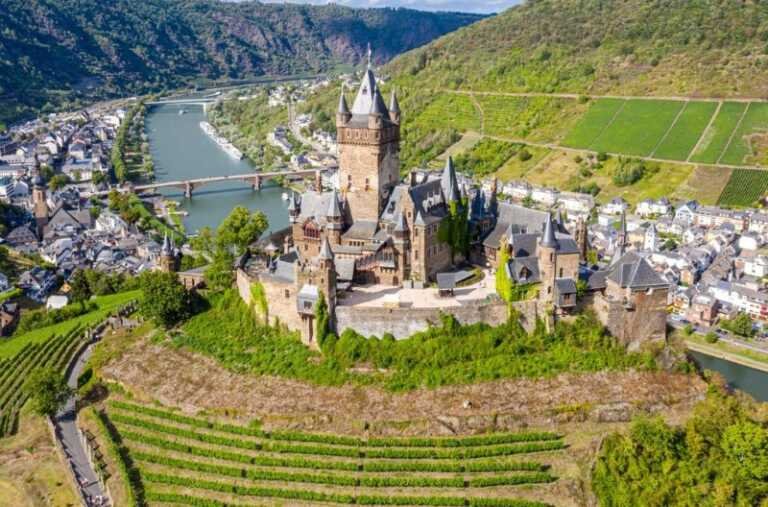
Location: Cochem, Rhineland-Palatinate, Western Germany
Best for: Medieval architecture, river scenery, wine-region experiences, and photography.
Reichsburg Cochem, also known as Cochem Imperial Castle, is one of the most picturesque castles in Germany. Standing high above the Moselle River, it offers wonderful views of the historic town, vineyards, and surrounding hills.
The original castle dates back to at least the 11th century and was once an important strategic fortress overlooking the Moselle Valley. Its elevated position made it valuable for controlling the surrounding river routes and protecting the region.
However, the castle experienced serious destruction in 1689 during the Nine Years’ War. It remained in ruins until the 19th century, when Berlin businessman Louis Fréderic Jacques Ravené purchased it and commissioned its reconstruction in a neo-Gothic style.
Today, Reichsburg Cochem combines medieval history with 19th-century romantic architecture. Its pointed towers, impressive walls, and decorative interiors make it an attractive destination for visitors interested in historic buildings.
The interior features historic furniture, decorative rooms, and traditional architectural details. Guided tours provide information about the castle’s past and the people connected with it.
Cochem itself is also worth exploring. The town is famous for its traditional half-timbered buildings, riverside atmosphere, and vineyards. Visitors can easily combine a castle trip with a relaxing walk through the historic streets.
Join a guided tour of the historic castle interiors.
Enjoy panoramic views of the Moselle River.
Explore the charming old town of Cochem.
Discover the surrounding vineyards and countryside.
Photograph the castle from different viewpoints around the town.
Enjoy a scenic walk along the river.
- Best Time to Visit: April to October is ideal for comfortable sightseeing and enjoying the Moselle Valley landscape.
- Visitor Tip: The walk from Cochem’s town centre to the castle involves an uphill route. Wear comfortable shoes or check local shuttle options before travelling.
8. Nuremberg Imperial Castle – Bavaria
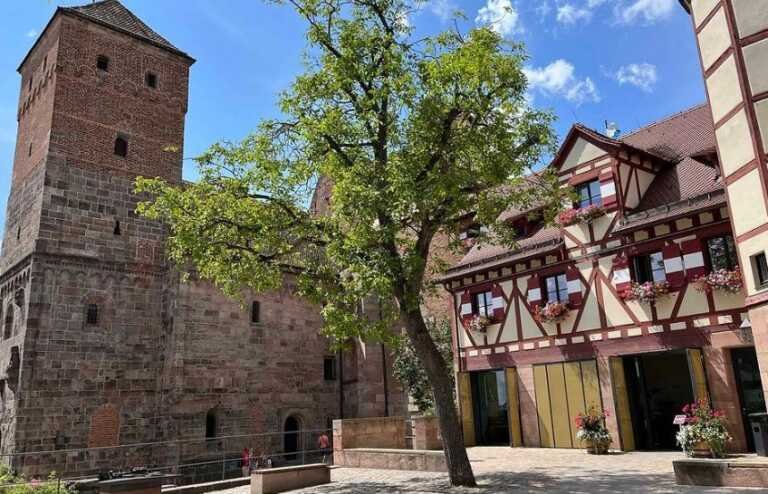
Location: Nuremberg, Bavaria, Southern Germany
Best for: Medieval history, imperial heritage, historic architecture, and city views.
Nuremberg Imperial Castle, also known as Kaiserburg, is one of the most important medieval landmarks in Germany. Rising above the historic streets of Nuremberg, this impressive castle complex offers visitors an opportunity to explore the political and cultural history of the Holy Roman Empire.
The castle was first mentioned in historical records in 1105. For centuries, it served as an important residence for Holy Roman Emperors during their visits to the city. Its strategic position on a rocky hill also made it an important defensive structure.
One of the most interesting features of the castle is its combination of buildings from different historical periods. The complex includes the imperial palace, chapels, towers, courtyards, and defensive walls.
The Sinwell Tower is a particularly popular attraction. Visitors who reach its observation platform can enjoy impressive views over Nuremberg’s historic Old Town. Another fascinating feature is the Deep Well, which was carved into the rock and reaches approximately 47 metres underground.
The Imperial Castle Museum is also worth visiting. Its exhibitions explain the history of the castle and the importance of Nuremberg during the medieval period.
Explore the historic imperial palace and courtyards.
Visit the Imperial Castle Museum.
Discover the impressive Deep Well.
Climb the Sinwell Tower for panoramic city views.
Admire the medieval defensive walls.
Explore Nuremberg’s historic Old Town nearby.
- Best Time to Visit: April to October is particularly pleasant for exploring the castle gardens and enjoying outdoor sightseeing.
- Visitor Tip: Allow at least two hours to explore the main attractions. The castle is located on a hill, so expect some uphill walking. Check which areas are open before visiting.
- For visitor information, see the official Nuremberg Imperial Castle guide
9. Hohenschwangau Castle – Bavaria
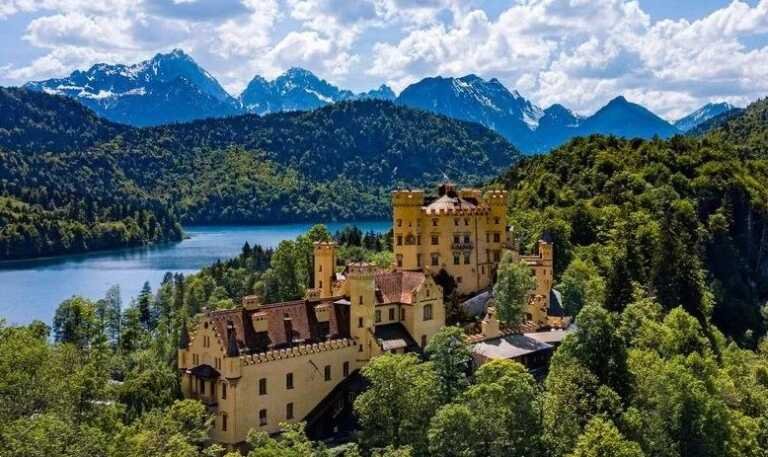
Location: Schwangau, Bavaria, Southern Germany
Best for: Bavarian royal history, mountain scenery, and historic architecture.
While many travellers visit Neuschwanstein Castle, its nearby neighbour, Hohenschwangau Castle, is equally interesting for anyone who loves German history.
Located above the beautiful Alpsee Lake, Hohenschwangau Castle has a distinctive yellow exterior surrounded by green forests and the mountains of Bavaria. Its peaceful location and historic character make it an excellent addition to a visit to the famous royal castles of the region.
The castle originally stood as a medieval fortress known as Schwanstein. It was later acquired and reconstructed in the 19th century by Crown Prince Maximilian of Bavaria, who became King Maximilian II.
Hohenschwangau became the childhood residence of King Ludwig II. It was here that he spent much of his early life, surrounded by romantic stories, medieval-inspired decorations, and beautiful mountain scenery. These surroundings helped shape his fascination with castles and romantic architecture.
Inside, visitors can discover historic rooms decorated with paintings, furniture, and artistic details inspired by medieval legends. The castle also provides an interesting perspective on the Wittelsbach royal family’s lifestyle.
Its location near Neuschwanstein makes it possible to explore both castles during the same trip.
Explore the historic royal rooms through a guided tour.
Discover the castle’s medieval-inspired decorations.
Enjoy views of Alpsee Lake and the surrounding mountains.
Learn about King Ludwig II’s childhood.
Explore the nearby Museum of the Bavarian Kings.
Combine your visit with nearby Neuschwanstein Castle.
- Best Time to Visit: May to September is excellent for enjoying the mountain scenery and surrounding lake views. Spring and early autumn are also good choices.
- Visitor Tip: Entry to the castle interior is through guided tours. Book tickets in advance, particularly if you want to visit both Hohenschwangau and Neuschwanstein on the same day.
- For current visitor information, visit the official Hohenschwangau Castle website
10. Marksburg Castle – Rhineland-Palatinate
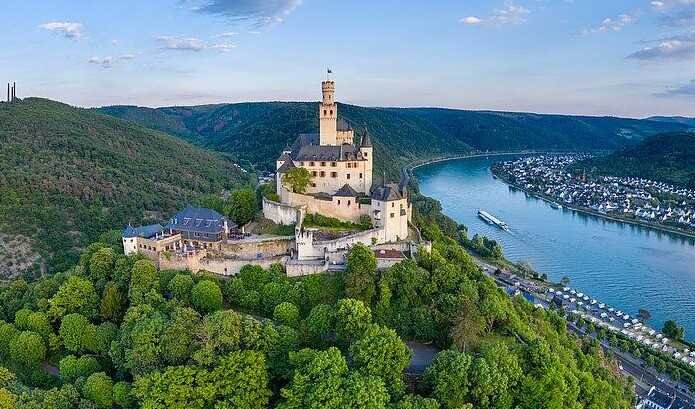
Location: Braubach, Rhineland-Palatinate, Western Germany
Best for: Authentic medieval architecture, Rhine Valley scenery, and history lovers.
Marksburg Castle is one of the most fascinating medieval castles in Germany. Located on a hill overlooking the Rhine River, this historic fortress offers visitors a rare opportunity to experience an almost completely preserved medieval castle.
The castle’s origins date back to the 12th century, when its original defensive tower was constructed. Over the following centuries, additional buildings, defensive walls, and towers were added to strengthen the fortress.
What makes Marksburg particularly special is that it is the only hilltop castle on the Middle Rhine that has never been destroyed. While many neighbouring castles suffered serious damage during wars, Marksburg survived and retained much of its historic character.
Today, the castle is closely associated with the German Castles Association, an organisation dedicated to preserving historic castles and fortifications.
Visitors can explore its medieval rooms, including the Great Hall, kitchen, chapel, armoury, and defensive areas. These spaces provide an interesting picture of everyday life inside a medieval fortress.
The surrounding Rhine Valley also makes the visit worthwhile. Beautiful river views, vineyards, traditional villages, and historic landscapes create a memorable atmosphere.
Explore the medieval courtyard and defensive walls.
Visit the historic Great Hall and castle kitchen.
Discover the medieval armoury and chapel.
Enjoy panoramic views of the Rhine Valley.
Learn about medieval castle life through guided tours.
Explore the nearby town of Braubach.
- Best Time to Visit: April to October is an excellent period for sightseeing and enjoying the Rhine Valley scenery.
- Visitor Tip: Castle visits are organised through guided tours. The route includes steep paths and stairs, so comfortable footwear is recommended. Check the tour schedule and available languages before travelling.
- For more information, visit the official Marksburg Castle website
11. Lichtenstein Castle – Baden-Württemberg
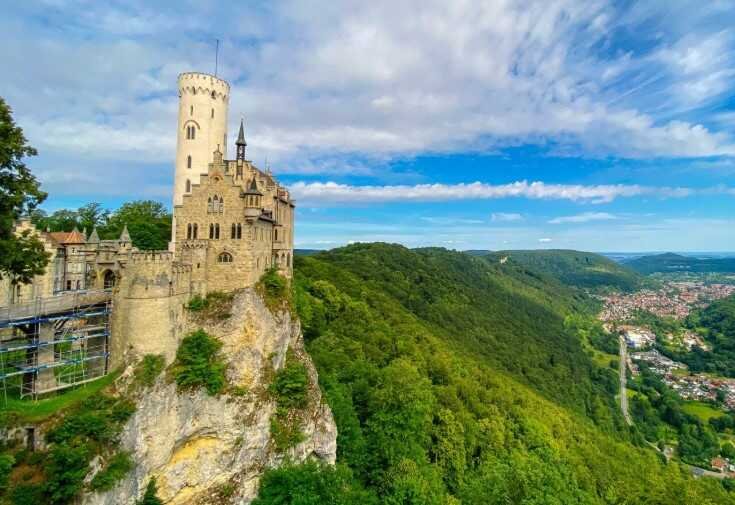
Location: Honau, near Reutlingen, Baden-Württemberg, Southwestern Germany
Best for: Fairytale architecture, mountain scenery, romantic history, and photography.
Lichtenstein Castle is one of the most picturesque castles in southwestern Germany. Built on a rocky cliff overlooking the Echaz Valley, this beautiful castle is often called the fairytale castle of Württemberg.
The present castle was constructed between 1840 and 1842 by Count Wilhelm of Württemberg. Its design was inspired by the medieval atmosphere described in Wilhelm Hauff’s historical novel Lichtenstein. The result is a remarkable building featuring pointed towers, fortified walls, and a wooden bridge that creates a romantic medieval appearance.
Although the castle looks like an ancient fortress, much of its current structure belongs to the 19th-century Romantic period. This makes it an interesting destination for visitors who appreciate historic architectural styles.
Inside, visitors can discover decorated rooms, historic furniture, weapons, and collections connected with the castle’s past. The location is equally impressive, with beautiful views of the surrounding Swabian Alps.
Explore the historic rooms through an organised castle tour.
Admire the impressive medieval-inspired architecture.
Photograph the castle from its scenic viewpoints.
Enjoy views of the Echaz Valley and Swabian Alps.
Discover the castle’s connection with Wilhelm Hauff’s novel.
- Best Time to Visit: April to October is a popular period for sightseeing and enjoying the surrounding scenery.
- Visitor Tip: Check the official website for tour schedules and access arrangements. The castle is situated on a rocky site, so comfortable walking shoes are recommended.
- For visitor information, see the official Lichtenstein Castle website
12. Burghausen Castle – Bavaria
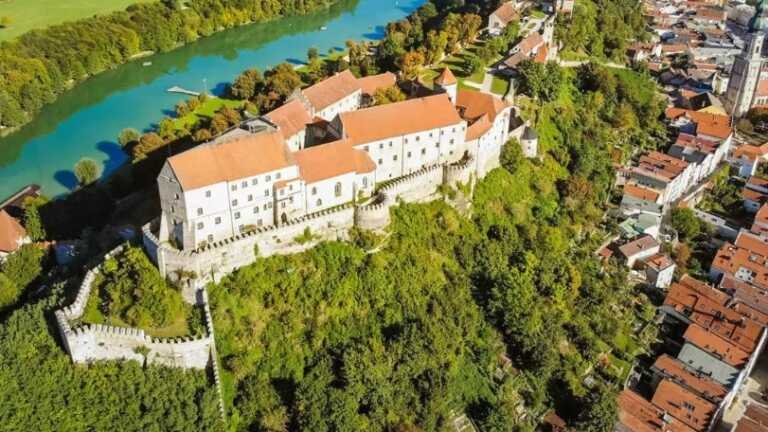
Location: Burghausen, Upper Bavaria, Southern Germany
Best for: Medieval fortifications, historic architecture, and panoramic countryside views.
Burghausen Castle is one of the most impressive medieval fortress complexes in Europe. Located on a narrow ridge above the old town of Burghausen, it stretches for more than a kilometre and offers a fascinating look at medieval defensive architecture.
The castle’s history goes back more than a thousand years, although its most important expansion took place during the late Middle Ages. The Dukes of Bavaria-Landshut developed it into a powerful fortress that protected their territory and royal residence.
One of the most remarkable features is its enormous length. The complex consists of several courtyards connected by defensive walls, gates, towers, and residential buildings.
Walking through the castle grounds gives visitors a sense of how medieval fortresses were designed to protect important political and military centres. Some sections also contain museums and historic exhibitions that explain the castle’s development.
The surrounding scenery adds another attraction. Visitors can enjoy beautiful views of the Salzach River, Wöhrsee Lake, and the historic town below.
Walk through the castle’s impressive courtyards.
Explore the historic museum exhibitions.
Admire the medieval defensive towers and gates.
Enjoy views of the Salzach River and Wöhrsee Lake.
Discover the charming old town of Burghausen.
Learn about the history of the Bavarian dukes.
- Best Time to Visit: May to September is ideal for exploring the extensive outdoor castle grounds.
- Visitor Tip: The castle complex is quite long, so allow enough time to explore it comfortably. Check the museum’s official information for current opening hours and exhibitions.
- For more information, visit the official Burghausen Castle tourism website
13. Braunfels Castle – Hesse
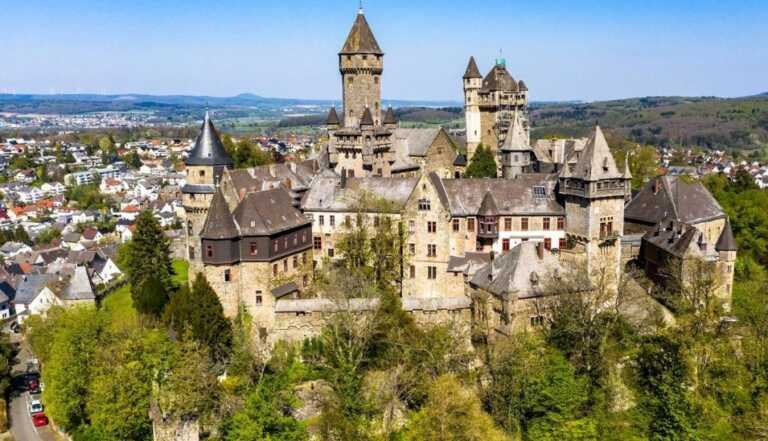
Location: Braunfels, Hesse, Central Germany
Best for: Medieval architecture, royal heritage, historic collections, and photography.
Braunfels Castle is a beautiful historic landmark that looks like something from a medieval storybook. Located above the charming town of Braunfels in the German state of Hesse, this impressive castle is known for its numerous towers, decorative roofs, and distinctive historic appearance.
The castle’s origins date back to the 13th century. It developed as the residence of the Counts of Solms and remained closely connected with the family for centuries. Over time, the building underwent several renovations and architectural changes, reflecting different periods of German history.
One of the most interesting aspects of Braunfels Castle is its combination of medieval elements and later architectural influences. Its impressive towers and fortified appearance make it particularly attractive to visitors interested in historic European castles.
Inside, visitors can discover historic rooms, furniture, weapons, uniforms, silverware, and porcelain collections. Guided tours provide a closer look at the castle’s history and the lifestyle of its former residents.
The surrounding town is also worth exploring. Its traditional streets, historic buildings, and peaceful atmosphere make Braunfels a pleasant destination for a day trip.
Explore the historic castle courtyard and towers.
Join a guided tour of the castle interiors.
Discover historical weapons and family collections.
Admire the castle’s impressive architectural details.
Walk through the historic town of Braunfels.
Enjoy photographs of the castle from different viewpoints.
- Best Time to Visit: April to October is a good period for sightseeing and enjoying the surrounding town.
- Visitor Tip: Guided tours are a useful way to understand the castle’s long history. Check the official website for available tours, admission arrangements, and seasonal opening times.
- For more information, visit the official Braunfels Castle website
14. Mespelbrunn Castle – Bavaria
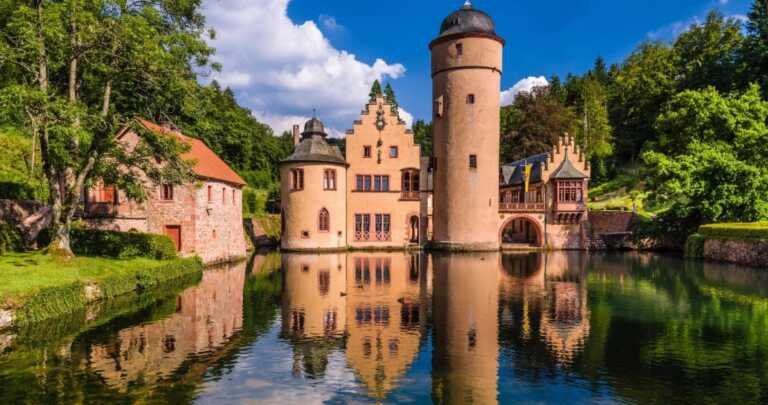
Location: Mespelbrunn, Lower Franconia, Bavaria, Southern Germany
Best for: Moated castle architecture, forest scenery, peaceful surroundings, and historic atmosphere.
Mespelbrunn Castle is one of the most charming hidden gems in Bavaria. Unlike many German castles built on mountain peaks, this historic residence is surrounded by water and nestled among the beautiful forests of the Spessart region.
The castle’s origins date back to the 15th century. Over time, it developed from a simple fortified building into a more comfortable Renaissance-style residence. Its towers, decorative windows, and traditional architecture create a distinctive appearance.
One of the most attractive features is the moat surrounding the castle. The reflection of the historic building in the water creates a beautiful scene, particularly during calm weather.
Mespelbrunn Castle has remained closely associated with the Echter family for generations. Its relatively secluded location helped preserve much of its historic character, making it an interesting destination for travellers who want to discover a quieter side of Germany.
Visitors can explore selected historic rooms and learn about the castle’s architecture and family history. The surrounding forest also offers opportunities for relaxing walks and enjoying nature.
Admire the castle’s beautiful reflection in the moat.
Explore the historic architecture and courtyard.
Join an available guided tour of the interior.
Enjoy the peaceful woodland surroundings.
Take photographs of the castle from different viewpoints.
Discover the nearby Spessart countryside.
- Best Time to Visit: Spring, summer, and early autumn are excellent seasons for enjoying the forest scenery and castle surroundings.
- Visitor Tip: The castle has seasonal visitor arrangements, so check its official website before planning your journey. Respect any restrictions around the privately owned historic property.
- For visitor information, visit the official Mespelbrunn Castle website
15. Glücksburg Castle – Schleswig-Holstein
Location: Glücksburg, Schleswig-Holstein, Northern Germany
Best for: Renaissance architecture, royal history, lakeside scenery, and cultural heritage.
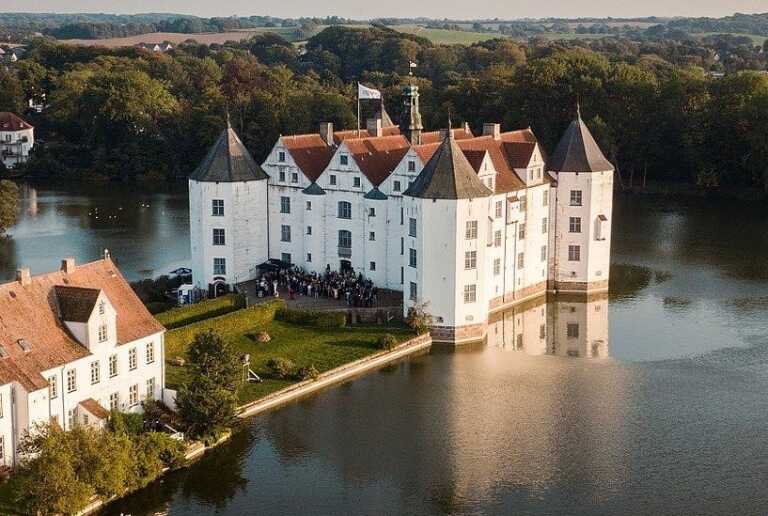
Glücksburg Castle is one of the most beautiful Renaissance castles in northern Germany. Situated on a small island surrounded by water, this elegant white castle is famous for its symmetrical architecture, peaceful setting, and connections with European royal families.
The castle was constructed between 1582 and 1587 under Duke John the Younger of Schleswig-Holstein-Sonderburg. It was built as a residence for the ruling family and later became closely connected with several European royal dynasties.
Its white exterior, impressive towers, decorative windows, and surrounding moat create a distinctive appearance. Unlike many medieval fortresses, Glücksburg Castle was designed primarily as a residential palace rather than a military stronghold.
Inside, visitors can discover historic rooms, antique furniture, portraits, decorative objects, and collections that reflect the lifestyle of the former royal residents. The castle museum provides additional information about its architectural development and historical importance.
The surrounding landscape is another reason to visit. The castle stands near the Flensburg Fjord, offering beautiful views and opportunities to explore the peaceful northern German countryside.
Explore the historic rooms and castle museum.
Admire the impressive Renaissance architecture.
Walk around the beautiful castle grounds.
Discover the history of European royal families.
Enjoy photography around the surrounding lake.
Explore the nearby town of Glücksburg and Flensburg Fjord.
- Best Time to Visit: May to September is ideal for enjoying the castle’s outdoor surroundings and lakeside scenery.
- Visitor Tip: Check the official visitor information for opening hours and guided tours. The castle has seasonal opening arrangements, so planning ahead is recommended.
- For tickets and visitor information, visit the official Glücksburg Castle website
Frequently Asked Questions (FAQs)
1. What is the most famous castle in Germany?
Neuschwanstein Castle is Germany’s most famous castle, known for its fairytale architecture and beautiful Alpine setting.
2. How many castles are there in Germany?
Germany has an estimated 20,000 castles, castle ruins, and palaces.
3. Which is the oldest castle in Germany?
Burg Eltz is among Germany’s best-preserved medieval castles, with origins dating back to the 12th century.
4. What is the best time to visit castles in Germany?
Spring and autumn are excellent seasons because of pleasant weather and beautiful scenery.
5. Can tourists visit the interiors of German castles?
Yes. Many castles offer guided tours, museums, and access to historic rooms.
6. Which German castle is best for photography?
Neuschwanstein, Burg Eltz, and Hohenzollern are particularly popular for their beautiful architecture and scenic locations.
7. Are German castles suitable for family visits?
Yes. Many castles offer interesting historical exhibitions, guided tours, and beautiful outdoor areas for families.

I am Sabiq Hasan Rasel. Coffee with Travel, Recipes & Reviews is a cozy and engaging content space that blends a love of coffee with exciting travel experiences, delicious recipes, and honest reviews. It offers inspiration for coffee lovers who enjoy exploring new places, trying unique flavors, and discovering lifestyle tips along the way.