Arizona isn’t just desert—it’s a place where the earth feels alive with color. The state’s famous red rock landscapes, shaped over millions of years by wind, water, and iron-rich minerals, create some of the most photogenic scenery in the United States . If you’re planning a trip (or just dreaming about one), these ten destinations offer the most unforgettable red rock views in Arizona.
1. Sedona – The Heart of Red Rock Country

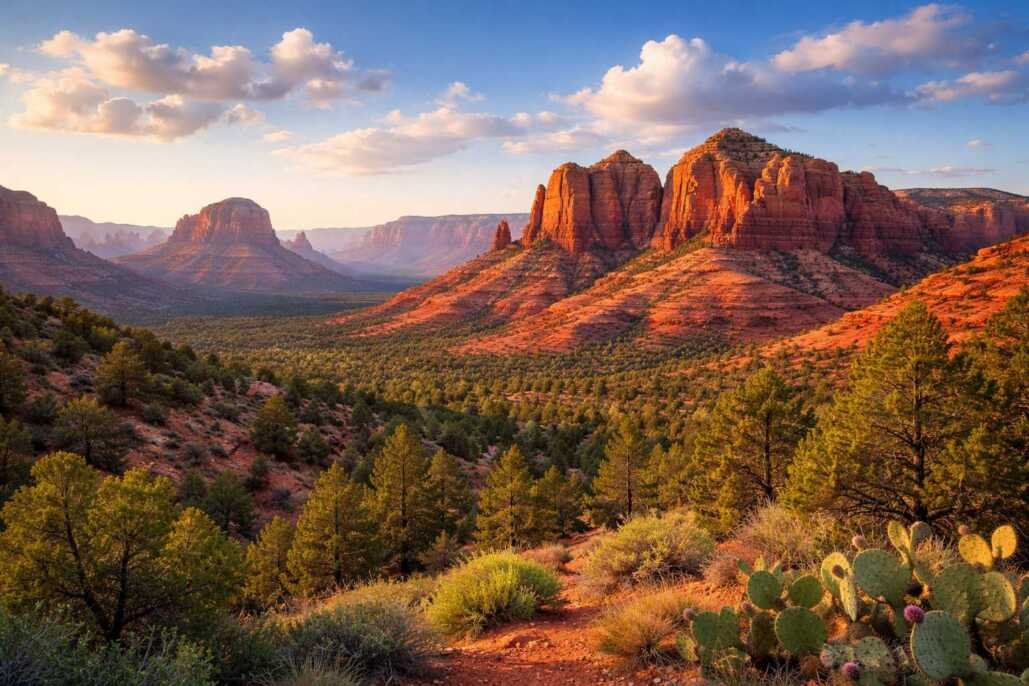
If Arizona had a postcard image, it would probably be Sedona. Towering sandstone formations glow in shades of red, orange, and even purple depending on the light.
What makes Sedona special isn’t just one rock—it’s the entire landscape. Massive buttes, cliffs, and spires stretch across miles of desert terrain, creating a surreal environment that feels almost otherworldly.
- Cathedral Rock (best at sunset)
- Bell Rock (easy access and hiking)
- Red Rock State Park
- Tip: Visit early morning or golden hour for the best colors and fewer crowds.
2. Monument Valley – Iconic Western Landscape

Monument Valley is the definition of dramatic. Giant sandstone buttes rise straight out of the desert floor, creating one of the most recognizable landscapes in the world.
You’ve probably seen it in movies—even if you didn’t realize it at the time.
- Massive rock formations towering hundreds of feet
- Wide-open desert views perfect for photography
- Deep cultural significance within Navajo Nation
- Tip: Book a Navajo-guided tour for access to restricted areas and deeper cultural insight.
3. Vermilion Cliffs National Monument – A Photographer’s Dream

This place feels like another planet. The Vermilion Cliffs are known for their swirling red sandstone formations, including the famous “Wave.”
These formations were created by erosion over millions of years, producing shapes that look almost like painted sand dunes.
- Unique wave-like rock formations
- Limited access (permit required for some areas)
- Stunning sunrise and sunset views
- Tip: Apply for permits early—this is one of the most competitive hikes in the U.S.
4. Painted Desert – A Colorful Twist on Red Rock

Unlike other red rock locations, the Painted Desert offers a mix of colors—reds, purples, pinks, and even lavender tones.
Stretching for miles, it’s less about towering cliffs and more about rolling hills that look like brushstrokes across the land.
- Unique multicolored landscape
- Easy scenic drives and viewpoints
- Located near Petrified Forest National Park
- Tip: Stop at multiple viewpoints—the colors change dramatically depending on the angle and time of day.
5. Red Mountain – Hidden Gem Near Flagstaff

If you want something less crowded, Red Mountain is a fantastic alternative. This collapsed volcanic cinder cone reveals layers of deep red and orange rock that feel almost Martian.
- Off-the-beaten-path experience
- Short but rewarding hiking trail
- Incredible textures and colors up close
- Tip: Bring water and go early—there’s little shade on the trail.
6. Antelope Canyon – Nature’s Light Show

Antelope Canyon is one of the most photographed places in Arizona—and for good reason. This narrow slot canyon is famous for its smooth, wave-like walls and dramatic light beams that shine through the openings above.
- Flowing sandstone formations shaped by flash floods
- Stunning light beams (best around midday)
- Unique photography opportunities
- Tip: Guided tours are required, and they sell out quickly—book in advance.
7. Horseshoe Bend – A Perfect Natural Curve

Just a short drive from Page, Horseshoe Bend offers a breathtaking view of the Colorado River looping around a massive red rock formation.
- A dramatic 270-degree river bend
- Easy 10–15 minute walk to the viewpoint
- Incredible sunset views
- Tip: Arrive early morning or late afternoon to avoid crowds and harsh lighting.
8. Chiricahua National Monument – The Wonderland of Rocks

Often overlooked, Chiricahua feels like a hidden world. Instead of wide-open deserts, you’ll find towering rock spires and balanced stones rising from the landscape.
- Unique rock formations unlike anywhere else in Arizona
- Peaceful, less crowded hiking trails
- Rich wildlife and birdwatching opportunities
- Tip: The Echo Canyon Trail offers some of the best views in the park.
9. Canyon de Chelly – Red Rock Meets History

Canyon de Chelly combines stunning red rock cliffs with deep cultural history. People have lived here for thousands of years, and ancient cliff dwellings are still visible today.
- Massive sandstone canyon walls
- Historic Native American ruins
- Scenic drives with multiple overlooks
- Tip: Take a guided tour with a Navajo guide to access the canyon floor.
10. Superstition Mountains – Rugged and Mysterious

Located near Phoenix, the Superstition Mountains are known for their jagged red rock peaks and legends of lost gold mines.
- Dramatic desert scenery
- Popular hiking trails like Peralta Trail
- Beautiful spring wildflowers
- Tip: Visit in spring for cooler weather and blooming desert plants.
Final Thoughts
Arizona’s red rock landscapes are more than just scenic backdrops—they’re experiences that stay with you. From the glowing formations of Sedona to the dramatic curves of Horseshoe Bend, each location offers something different. If you plan smartly—timing your visits for sunrise or sunset and mixing popular spots with quieter ones—you’ll get a much richer, more personal experience.
Frequently Asked Questions (FAQs)
1. What is the best time to visit Arizona’s red rock landscapes?
Spring (March–May) and fall (September–November) offer the best weather and lighting conditions.
2. Which red rock destination is best for first-time visitors?
Sedona is the most accessible and beginner-friendly, with plenty of viewpoints and easy hikes.
3. Do I need permits to visit these locations?
Some areas, like Vermilion Cliffs National Monument, require permits for specific hikes, while most others are open to the public.
4. Are these places suitable for families?
Yes, many spots like Painted Desert and Horseshoe Bend have easy access and are family-friendly.
5. How many days do I need to explore red rock landscapes?
Ideally 3–5 days to cover major highlights without rushing.
6. What should I pack for visiting red rock areas?
Bring water, sunscreen, comfortable shoes, and a camera—these environments can be hot and dry year-round.

I am Sabiq Hasan Rasel. Coffee with Travel, Recipes & Reviews is a cozy and engaging content space that blends a love of coffee with exciting travel experiences, delicious recipes, and honest reviews. It offers inspiration for coffee lovers who enjoy exploring new places, trying unique flavors, and discovering lifestyle tips along the way.