
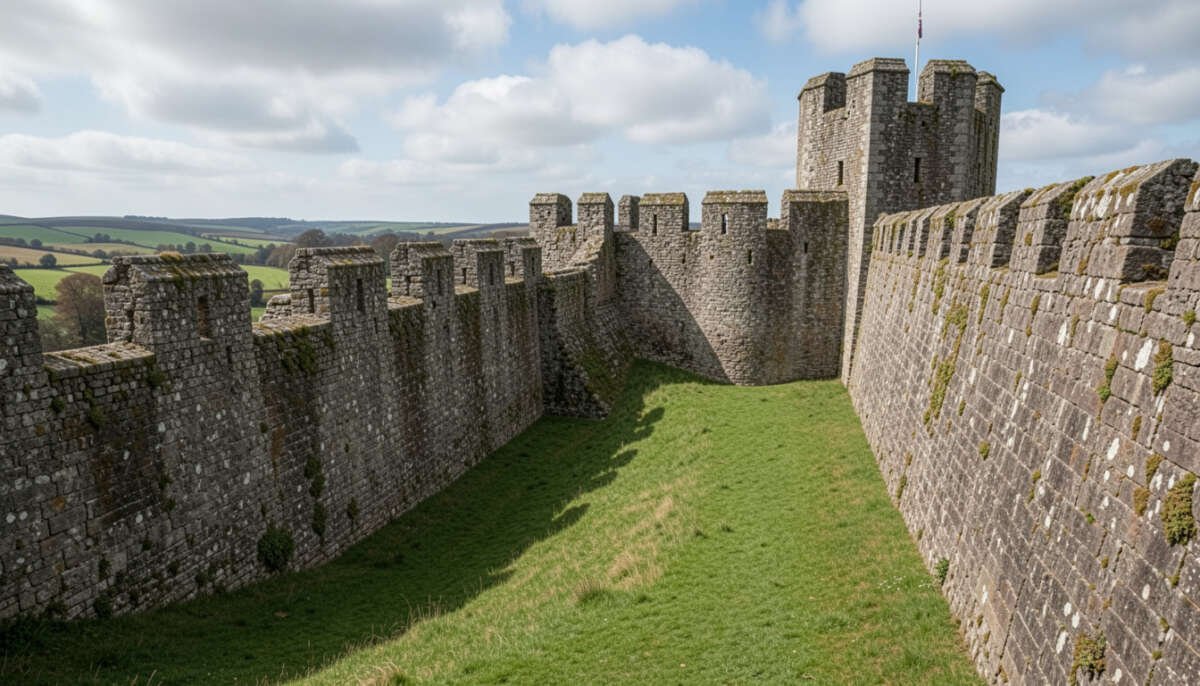
Medieval ramparts are living echoes of an age of knights, kings, sieges and strategic warfare. If you’re fascinated by history and love the feeling of walking where people defended their homes centuries ago, the United Kingdom delivers some of Europe’s most impressive and accessible ramparts — from complete city circuits to dramatic castle defences. In this 2026 guide, I’m sharing the top 15 medieval ramparts you must see, with history, visiting details and tips that’ll help you plan an unforgettable trip.
1. York City Walls – The Longest Walkable Ramparts in England

The ramparts that encircle York are arguably the finest surviving example of medieval urban walls in England — and the longest medieval town walls you can walk in the country.
Why visit:
- Built largely in the 13th century on older Roman and Norman earthworks, these medieval walls stretch about 3.4 km (2 miles) and offer a scenic elevated circuit around York’s historic centre.
- As you walk, you’ll see original bars (fortified gateways) like Micklegate Bar and Monk Bar, defensive towers, and dramatic views over York Minster and the river.
- The ramparts are free to explore on foot, and include sections built atop earthen ramparts that date back nearly 800 years.
- Tip: Start at the Museum Gardens and walk clockwise so you catch the best elevated views at sunset.
2. Berwick‑upon‑Tweed Castle and Ramparts – Complete Fortress Defences
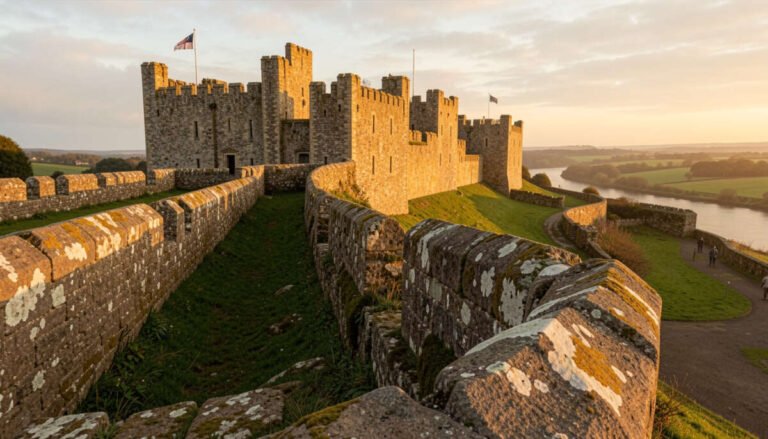
Right on the Scottish border, the ramparts of Berwick‑upon‑Tweed are incredibly intact and walkable, and few people realize just how significant they are in England’s military history.
Why it’s special:
- These ramparts were redesigned in the 16th century into a modern artillery defence system ordered by Queen Mary I to protect England from invasion.
- You can walk the entire circuit of defensive walls around the town — a rare experience — and learn the strategic importance of this place as a contested stronghold between England and Scotland.
- Along the way, battlements, bastions and views over the River Tweed tell the story of centuries of warfare and shifting borders.
- Visitor tip: Giving yourself at least half a day here lets you explore the Barracks Museum and follow the ramparts at your own pace.
3. Conwy Town Walls – Welsh Medieval Marvel by King Edward
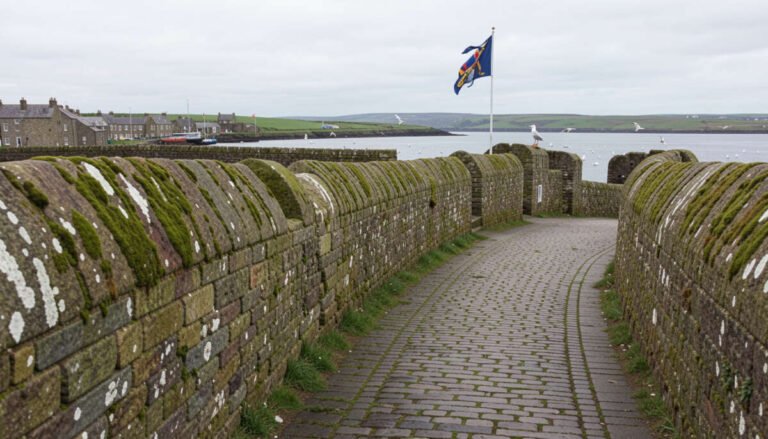
One of the most complete and impressive medieval town walls in Europe, Conwy’s walls were built alongside Conwy Castle between 1283 and 1287.
Top reasons to go:
- The circuit stretches for 1.3 km, featuring 21 towers and three medieval gatehouses that once guarded access into the walled town.
- These fortifications are part of the Castles and Town Walls of King Edward in Gwynedd, a prestigious UNESCO World Heritage Site that reflects the peak of medieval military design.
- Climbing certain sections offers dramatic views over the Conwy Estuary and Snowdonia beyond, blending natural beauty with architectural brilliance.
- Tip: Pair your wall walk with a visit to Conwy Castle itself for a full Edwardian defence experience
4. Chester City Walls – The Most Complete Roman & Medieval Circuit in Britain

When people think of medieval ramparts, they often forget that walls don’t have to be part of a castle — some encircled entire cities. Chester City Walls combine Roman origins with medieval fortification and remain virtually intact today.
Why you’ll love it:
- The walls create a continuous elevated walk of almost 2 miles around Chester’s heart, crossing major gates and passing defensive towers.
- This is one of the best wall walks in Britain if you want a mix of historic structure and urban practicality — there are shops, pubs, and places to rest along the way.
- Despite later additions, much of the medieval stonework and towers survives beautifully, with interpretive signs that bring the story to life.
- What to bring: Good walking shoes — the circuit is elevated and can be uneven in places.
5. Tenby Town Walls – Wales’ Hidden Medieval Fortress
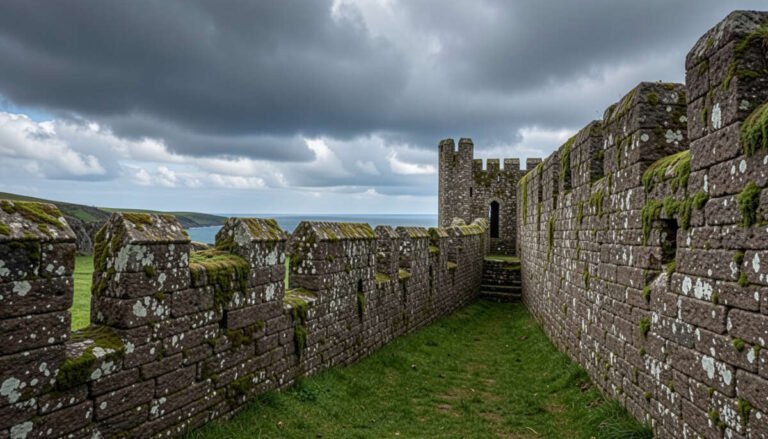
Not as famous as the others on this list, the Tenby town walls in Pembrokeshire are nonetheless a gem of 13th‑century defensive architecture.
What makes Tenby special:
- These ramparts were originally built in the 1200s by the Earls of Pembroke, replacing earlier earth defences and protecting the port town from attack.
- Even though many medieval gates were lost over time, the surviving walls still give a real feel for how towns defended themselves — and they frame Tenby’s charming seaside streets and sandy beaches beautifully.
- This is the perfect pick if you want medieval walls with coastal views and a visitor experience that mixes history with seaside exploration.
- Tip: Walk the outer edges at golden hour so the limestone glows and you catch an unforgettable view.
6. Newcastle town wall
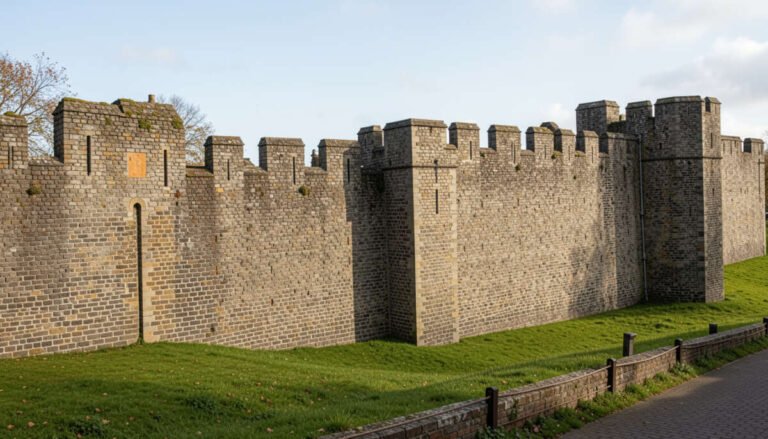
Strolling the medieval remnants of Newcastle’s town wall gives you a real sense of how this northern English city protected itself during the fierce border conflicts with Scotland.
History & Highlights
- Built in the 13th and 14th centuries, this stone defensive circuit once stretched around the town and stood up to 7.6 m (25 ft) tall in places.
- It included six main gates and seventeen towers, with the stone walls more than 2 m thick in some parts — a serious deterrent to attackers.
- While much of the circuit has disappeared over time, visitors can still trace sections of wall and imagine how imposing the fortifications would have looked in their prime.
- Visitor tip: Look out for signs and plaques in town marking where the old wall once stood — they’re a fun way to turn a walk into a history hunt.
7. Alnwick town walls
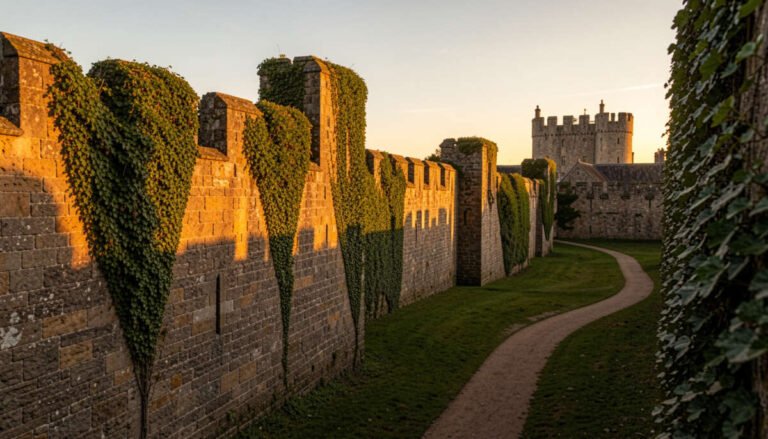
Not far from the famous castle in Northumberland, the town walls of Alnwick are a quieter but intriguing glimpse into later medieval town defenses.
Why they matter
- Built in the 15th century to protect this important northern market town, the walls were funded by murage (a toll on goods) granted in 1434.
- What survives today includes the impressive Bondgate Tower, visibly decorated with the Percy family lion crest — a rare example of nobles’ symbols on civic defenses.
- You’ll also spot Pottergate, rebuilt later but tracing the line of the old wall circuit.
- Bonus: Pair your visit with Alnwick Castle (made famous in films and TV) for a full medieval experience.
8. Abergavenny town walls
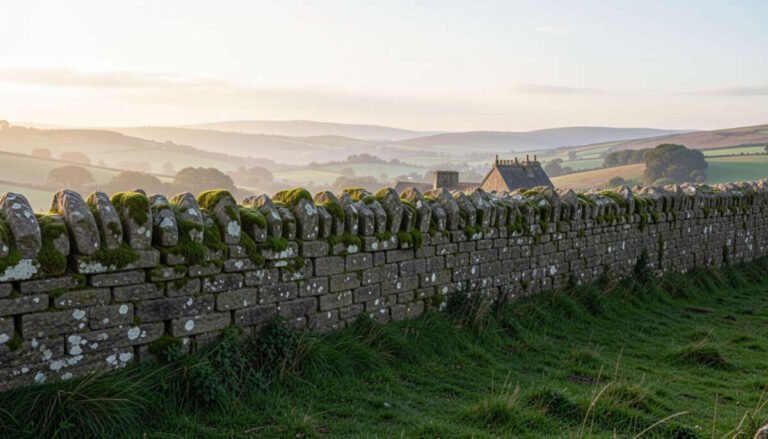
Not all historic walls are huge to walk — some tell their story in fragments, and Abergavenny’s town walls are a brilliant example of how you can read medieval defense even where time has worn it away.
Story behind the stones
- After Norman conquest and the building of a castle nearby, Abergavenny’s original wooden town defenses were gradually replaced in stone in the 13th century.
- Today you won’t find a complete circuit, but masonry remains and the line of the wall are still visible around parts of the town — especially along later buildings that incorporated the old defenses.
- It’s a fascinating example of how medieval walls were gradually absorbed into post‑medieval town life.
- Photographers & history explorers: Look for mismatched stones and odd wall angles — those are often clues to the original medieval structure.
9. Pembroke town walls
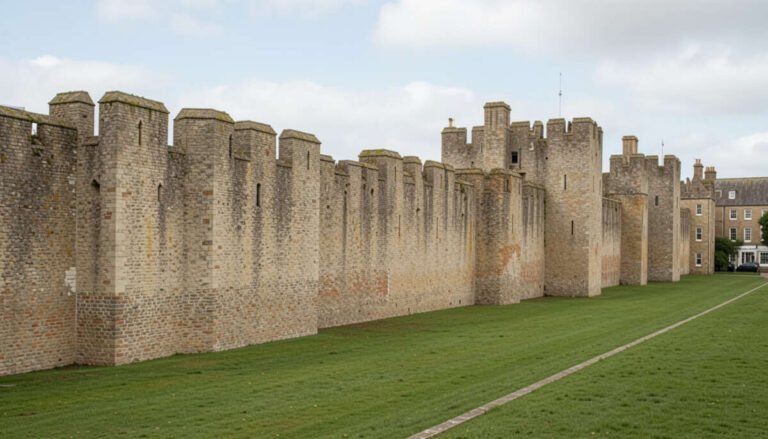
Pembroke’s medieval defenses aren’t as walkable as others, but they’re rich in context and worth a stop if you’re exploring Wales’s historic coastal towns.
What makes them special
- Built in the first half of the 13th century, Pembroke’s town wall formed a compact defensive circuit around a settlement dominated by Pembroke Castle.
- The wall was constructed of mortared limestone and likely featured a battlemented parapet and wall‑walk in its heyday — integral parts of medieval defenses that let soldiers patrol and defend effectively.
- While much has vanished, archaeological interpretation reveals its original footprint and relationship to the castle — a great story for heritage enthusiasts.
- Combine your visit: The town’s medieval street plan still echoes its defensive layout — great for walking tours.
10. Medieval Town Walls Across the UK – Hidden Gems Worth Exploring
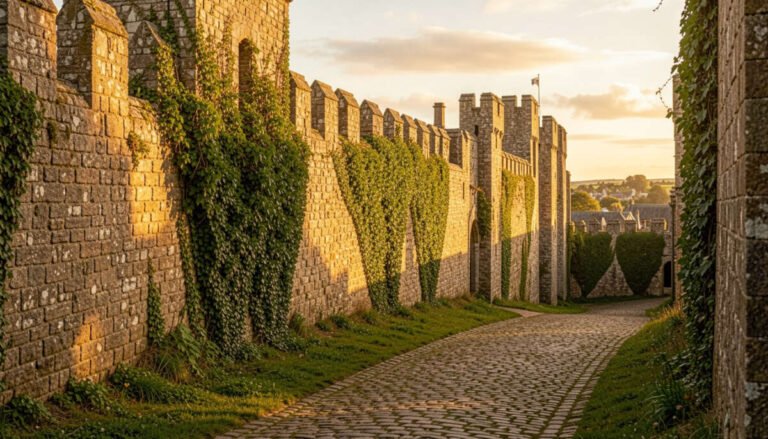
Beyond the sites above, there are dozens of historic walled towns and rampart remnants that history lovers should know about. Some of the best lesser‑known examples include:
- Canterbury, Kent – surviving medieval barriers just outside the iconic cathedral.
- Colchester, Essex – remnants of Roman walls later strengthened in medieval periods.
- Rye, East Sussex – parts of old town defenses still stand at the harbour edge.
- Winchelsea, East Sussex – medieval plan almost intact despite coastal challenges.
- Stirling, Scotland – old defensive circuits around the historic old town.
- What connects them all is a story of survival and urban identity — and these sites make excellent blog additions if you want bonus sections or future posts on walled heritage.
11. Oxford City Walls – Remnants of a 13th‑Century Curtain
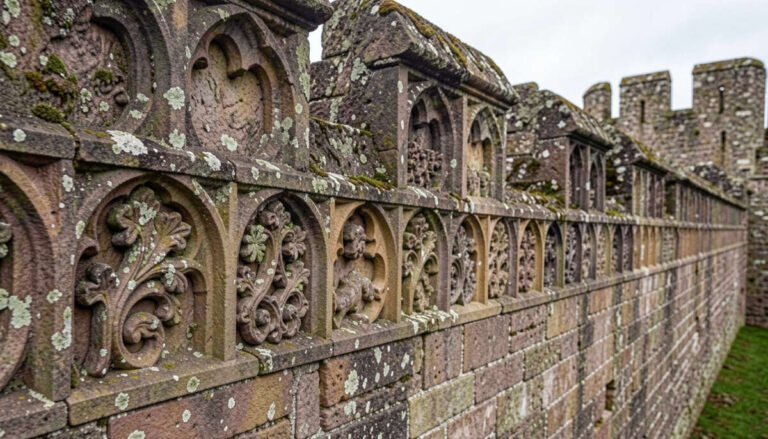
Oxford city walls once enclosed the medieval town of Oxford in a stone circuit built mainly between 1226 and 1240, replacing earlier Saxon earthworks and ramparts. These walls defined the limits of the town and helped control trade and security in one of England’s most important academic and market centres.
Why it’s interesting:
- The circuit enclosed an area of roughly 2 miles — with bastions, gates, and walkable stretches that can still be found today in unexpected places like college gardens and along city streets.
- You’ll find surviving sections near New College’s garden and off Broad Street — not always obvious, but fascinating once you start spotting them.
- The wall wasn’t just defence — it was a statement of urban identity and civic pride in the medieval era.
- Tip: Pair your exploration of the walls with a historic walking tour of Oxford’s colleges and medieval landmarks — the walls thread right through the city’s old heart.
12. Shrewsbury Town Walls & Town Walls Tower – Echoes of Anglesey and Norman Days
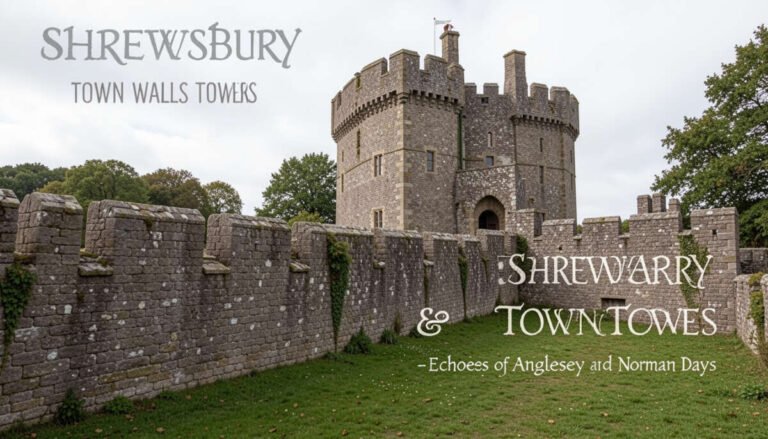
Town Walls Tower stands as the last visible medieval watchtower of what were once extensive town walls around Shrewsbury, Shropshire. While the full circuit has mostly vanished, the surviving tower and fragments of wall tell a vivid story of medieval defence against Welsh incursions in the 13th and 14th centuries.
Highlights:
- The walls themselves were constructed as stone defences replacing earlier earth and timber ramparts, particularly from about 1218–1242.
- Town Walls Tower (also known as Wingfield’s Tower) was one of several watch posts on the circuit and is now managed by the National Trust — a rare preserved piece of what was once a larger defensive line.
- Today you won’t walk a complete wall circuit, but the tower and street line called Town Walls trace the mindset and layout of medieval fortifications.
- Visitor angle: This is a great stop in a historic market town — especially for people who like to read the landscape and imagine how defences shaped daily life.
13. Berwick town walls – Frontier Fortifications Between England and Scotland
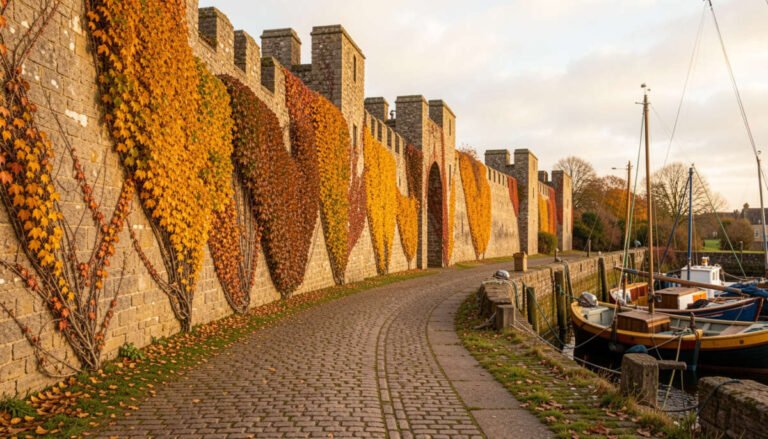
While I’ve already highlighted the ramparts around Berwick‑upon‑Tweed’s castle, the town walls themselves deserve their own spotlight. Built mainly in the early 14th century under Edward I, this defensive circuit once surrounded the whole town and was part of its strategic role as a border stronghold.
Key features:
- The walls stretched for about 2 miles, with towers and battlements up to 22 feet (6.7 m) high.
- Funded through murage (a medieval tax on goods), they reflected Berwick’s importance as a contested settlement in English‑Scottish conflicts.
- While many sections are gone or integrated into later structures, substantial portions, earthworks and towers remain visible as you walk around the historic town.
- Why it’s worth visiting: The mix of water, rampart remains and border history make this a dramatic and compelling stop — perfect for history enthusiasts.
14. Exeter City Walls – Part of a Broader Medieval Defence System
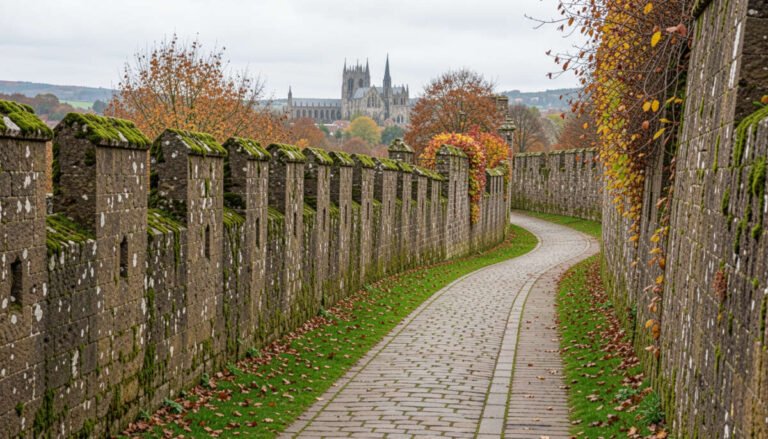
Exeter is a city rich in medieval memory, and its city walls — originally Roman but heavily reinforced in the medieval period — form an impressive lattice of stone defences around much of the old town. While the full ramparts aren’t intact as a walkable circuit, many stretches survive and you can follow them on foot with great views over the city and its cathedral. (Note: this entry is based on extensive historical fortification listings — see comprehensive sources like the Gatehouse Gazetteer as a guide to more fort sites.)
Merits:
- Exeter’s walls evolved from Roman to medieval stone fortifications and were crucial during conflicts like the English Civil War.
- You can still find sections behind city buildings, near the cathedral, and along the quay — great for a history‑meets‑urban‑walk post.
- Their layered history (Roman + medieval + later rebuilding) tells a longer architectural story.
- Reading angle: This is a terrific example of how medieval fortifications adapted older systems (like Roman walls) and stayed relevant for centuries.
15. Beaumaris Town Walls – Anglesey’s Forgotten Medieval Circuit
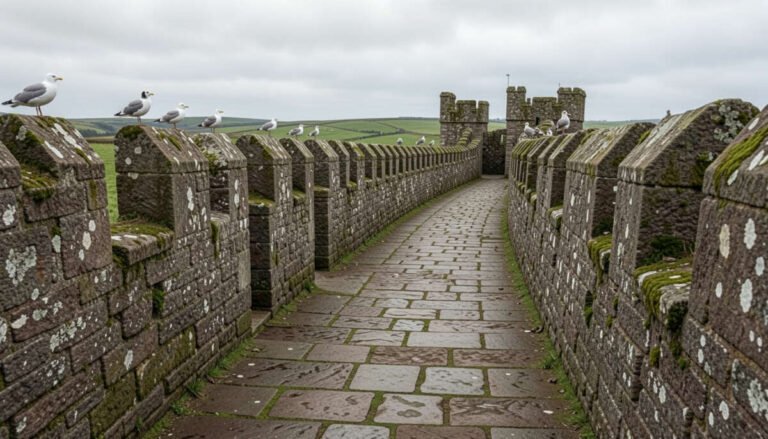
Beaumaris town walls once enclosed the town of Beaumaris on Anglesey, complementing the magnificent Beaumaris Castle nearby. Much of the wall now exists as footings and low ruins, but enough remains to show how this coastal town was fortified and how its ramparts — though more modest than York’s — protected commerce and residence.
Why it’s worth a look:
- Beaumaris’s medieval town walls form part of the island’s rich defensive network connected to Edward I’s campaigns in Wales.
- Even as earthworks and rubble foundations, the old wall line makes a fascinating walking experience for readers interested in battlefield archaeology and town layout.
- Some stretches are easy to visit on foot while exploring the town’s harbour and castle.
- Blog tip: Pair this with Beaumaris Castle (a UNESCO World Heritage Site) for readers planning a Wales heritage itinerary.
Final Thoughts
The UK’s medieval ramparts are more than just stone walls — they’re gateways into centuries of history, telling stories of kings, battles, townspeople, and city life. From the towering York City Walls to hidden gems like Beaumaris and Abergavenny, each site offers a unique experience for history lovers, photographers, and curious travelers alike. Walking these walls lets you step into the past while enjoying scenic views, charming towns, and coastal vistas.
Whether you’re exploring famous circuits or lesser-known fortifications, these ramparts are living history — and they’re waiting for you to discover them in 2026.
Frequently Asked Questions (FAQ)
1. Are these medieval ramparts free to visit?
Most city walls are free to walk (e.g., York, Chester), but some sites like Berwick Castle and Conwy Castle may have an entry fee for adjacent castle areas. Always check official websites before visiting.
2. What is the best time of year to explore these walls?
Spring and autumn are ideal: mild weather, fewer crowds, and beautiful natural scenery complementing the historic structures.
3. Are the walls suitable for children and families?
Yes! Most ramparts offer safe walking paths, but some towers and elevated sections may be steep. Bring sturdy shoes and supervise young children.
4. How long does it take to walk a complete rampart circuit?
It varies:
- York City Walls: ~2–3 hours
- Chester City Walls: ~1.5–2 hours
- Smaller towns like Abergavenny or Tenby: 30–60 minutes
5. Can I combine multiple walls into a UK tour?
Absolutely! A themed tour covering York, Chester, Conwy, and Berwick could be done over 5–7 days, mixing historic towns, castles, and coastal views.