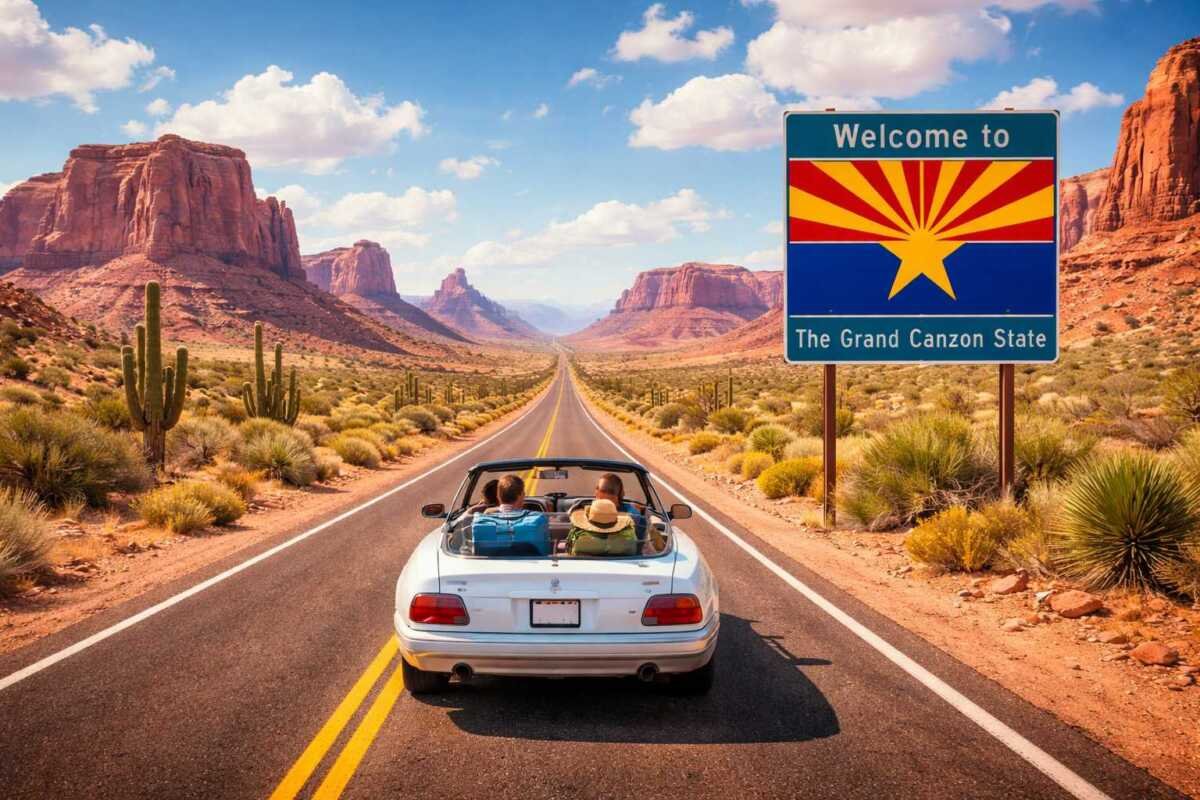
Driving in Arizona feels different from driving in most places. It’s not just about getting from one point to another—it’s about long desert highways, mountain roads, quiet small towns, and some of the most iconic natural landmarks in the United States. If you’re a tourist, driving here can be one of the best decisions you make. But it also requires preparation. Arizona has extreme weather, long distances between cities, and strict traffic enforcement that visitors often underestimate. This guide covers everything in a simple, real-world way so you can feel confident behind the wheel.
Why You Should Drive in Arizona as a Tourist
Public transport in Arizona is very limited outside major cities like Phoenix or Tucson. Most of the famous attractions are spread far apart, including:
- Grand Canyon National Park
- Sedona red rock region
- Antelope Canyon
- Monument Valley
- Lake Powell
Without a car, visiting these places becomes difficult, expensive, or time-consuming.
Driving gives you:
- Full flexibility over your travel schedule
- Access to remote scenic areas
- The freedom to stop anywhere for photography
- A true road trip experience through the American Southwest
- In Arizona, the journey is just as impressive as the destination.
Basic Driving Rules You Must Follow
Arizona follows standard U.S. traffic laws, but there are important rules every tourist should know.
1. Drive on the Right Side
- All vehicles drive on the right-hand side of the road. Overtaking is done on the left.
2. Seat Belts Are Mandatory
- Every passenger must wear a seat belt, including back-seat passengers. Police can fine you for non-compliance.
3. Speed Limits Are Strictly Enforced
Speed limits vary depending on location:
- Residential areas: 25–35 mph
- City roads: 35–45 mph
- Highways: 55–75 mph
- Some rural interstates: up to 80 mph
- Speed cameras and highway patrols are common, so always stay within limits.
4. Mobile Phone Use Is Restricted
- Arizona enforces distracted driving laws. You cannot hold your phone while driving. Use Bluetooth or hands-free systems only.
5. Right Turn on Red Is Allowed
- Unless a sign says “No Turn on Red,” you can turn right at a red light after stopping completely.
Renting a Car in Arizona (What Tourists Should Know)
Most tourists rent a car immediately after arriving at airports like Phoenix Sky Harbor International Airport.
Requirements:
- Valid driver’s license
- Passport (for international visitors)
- Credit card in the driver’s name
- Minimum age: usually 21+ (extra fees under 25 are common)
Insurance:
- Rental companies will offer insurance options. It is strongly recommended to take coverage unless your travel insurance already includes it.
Arizona Driving Conditions You Should Prepare For
Arizona is not like driving in a compact city or countryside in many other countries. The environment plays a huge role.
1. Extreme Heat
During summer, temperatures often exceed 100°F (38°C) and can go above 115°F (46°C) in some areas.
This affects:
- Tire pressure (can increase or burst if not checked)
- Engine cooling systems
- Driver fatigue and dehydration
- Always carry water in your car—more than you think you need.
2. Long Distances Between Stops
It’s common to drive 1–2 hours without seeing a major town or gas station.
That means:
- Never let your fuel drop too low
- Plan rest stops in advance
- Download offline maps
3. Sudden Weather Changes
Arizona is mostly dry, but monsoon season (June–September) brings:
- Heavy rain
- Flash floods
- Dust storms (locally called “haboobs”)
- Never drive through flooded roads—even shallow water can be dangerous and unpredictable.
Important Road Safety Tips for Tourists
1. Watch for Wildlife
- In rural and desert areas, animals like deer, coyotes, and cattle can cross roads unexpectedly, especially at dawn and dusk.
2. Use Offline Navigation
- Cell service can disappear in remote regions like Grand Canyon routes or desert highways.
3. Keep Emergency Supplies
A basic travel kit should include:
- Drinking water
- Snacks
- Phone charger/power bank
- First aid basics
- Sunglasses and sunscreen
4. Be Careful on Night Driving
Night driving in desert areas can be risky due to:
- Low visibility
- Wildlife movement
- Long empty roads
- If possible, plan long drives during daylight hours.
Traffic Laws Tourists Often Miss
These are small details that can cause fines if ignored:
School Buses
- You must stop when a school bus displays flashing red lights—no exceptions from either direction (unless divided highway rules apply).
HOV Lanes
- High-occupancy vehicle lanes are reserved for cars with multiple passengers during certain hours.
Open Container Law
- Alcohol cannot be kept open inside a vehicle cabin.
Pedestrian Rules
- Pedestrians have strong right-of-way in marked crosswalks. Always stop.
Fuel and Gas Station Tips
Gas stations are common in cities but sparse in desert regions.
Helpful tips:
- Refuel when your tank hits half in rural areas
- Prices vary between cities and highways
- Some remote stations may close early
- Never assume the next station is “just a few miles away”—distances can be misleading in Arizona.
Parking Rules in Cities
If you’re driving in Phoenix, Scottsdale, or Tucson, pay attention to parking signs carefully.
Common rules include:
- Time-limited street parking
- Residential permit zones
- Metered parking in busy areas
- Ignoring signs can result in towing or fines.
Best Scenic Drives in Arizona
Driving is one of the best ways to explore the state’s natural beauty. Some routes are unforgettable:
1. Desert View Drive (Grand Canyon)
- Offers multiple viewpoints of the canyon with easy stops along the way.
2. Red Rock Scenic Byway (Sedona)
- Famous for dramatic red rock formations and sunset views.
3. Apache Trail
- A rugged and scenic route through desert landscapes, lakes, and canyons.
4. Route 66 (Northern Arizona)
- A historic highway filled with nostalgic roadside towns.
Safety Advice for First-Time Drivers
- Start driving early to avoid heat and traffic
- Take breaks every 2–3 hours
- Stay hydrated at all times
- Avoid rushing—distances are longer than they look on maps
- Check weather updates before long trips
- Arizona driving is not difficult, but it rewards careful planning.
Final Thoughts
Driving in Arizona as a tourist is one of the best ways to experience the American Southwest. It gives you freedom, access to incredible landscapes, and the ability to explore at your own pace.
However, success on the road here depends on preparation. Understand the environment, respect the traffic laws, and plan your journey properly.
If you do that, Arizona won’t just be a destination—it will become a road trip experience you remember for life.
Frequently Asked Questions (FAQs)
Is driving in Arizona difficult for tourists?
- No, roads are well-maintained, but long distances and heat require preparation.
Do I need an international driving permit?
- It depends on your home country, but it is recommended along with your license.
Can I drive to the Grand Canyon easily?
- Yes, it takes about 4 hours from Phoenix via well-marked highways.
Is GPS reliable in Arizona?
- Mostly yes, but offline maps are essential in remote areas.

I am Sabiq Hasan Rasel. Coffee with Travel, Recipes & Reviews is a cozy and engaging content space that blends a love of coffee with exciting travel experiences, delicious recipes, and honest reviews. It offers inspiration for coffee lovers who enjoy exploring new places, trying unique flavors, and discovering lifestyle tips along the way.