
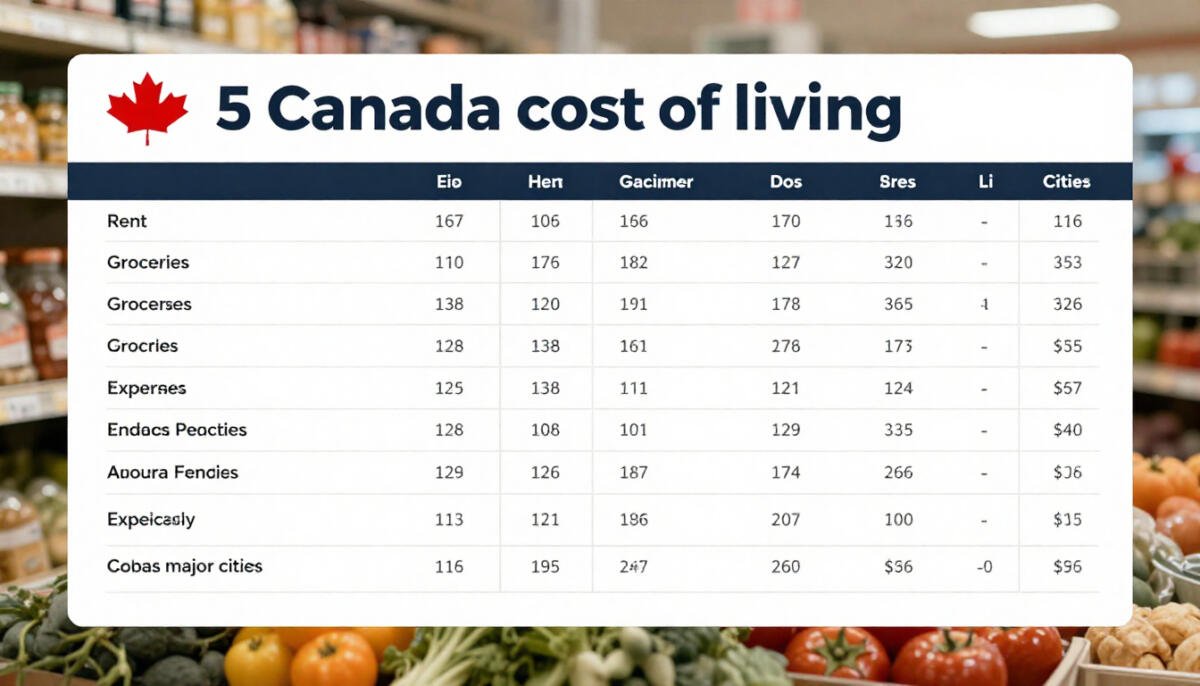
Canada is known for its high quality of life, but the cost of living can vary dramatically depending on the city or province. In 2026, smart planning can help you stretch your money, whether you’re a student, young professional, or a family.
1. Average Cost of Living in Canada 2025

Here’s an overview of monthly expenses for a single person and a family of four (excluding major luxuries):
| Expense | Single Person | Family of 4 |
|---|---|---|
| Rent (1-bedroom apartment) | CAD 1,200 – 2,500 | CAD 2,000 – 4,000 (3-bedroom) |
| Utilities (electricity, heating, water) | CAD 150 – 250 | CAD 250 – 400 |
| Internet & phone | CAD 70 – 120 | CAD 120 – 200 |
| Groceries | CAD 300 – 500 | CAD 800 – 1,200 |
| Transportation (public transit) | CAD 100 – 150 | CAD 200 – 300 |
| Health insurance / medical | CAD 0 – 100* | CAD 200 – 400* |
| Miscellaneous | CAD 200 – 400 | CAD 500 – 800 |
- Healthcare coverage depends on province; most provinces cover basic healthcare for residents, but some services or private insurance might be required.
- Tip: Rent is the largest cost, especially in cities like Toronto or Vancouver. Living outside major metropolitan areas can save you thousands per year.
2. Cheapest Cities to Live in Canada (2026)

Here’s a list of affordable cities with lower rent and living costs but still offering good quality of life:
a) Winnipeg, Manitoba
Rent: CAD 1,100–1,400 for 1-bedroom
Groceries & utilities: Moderate
Why it’s cheap: Manitoba’s smaller population and lower housing demand reduce costs.
Lifestyle: Offers cultural attractions, parks, and a strong job market in healthcare and manufacturing.
b) Regina, Saskatchewan
Rent: CAD 1,100–1,300 for 1-bedroom
Groceries & utilities: Lower than national average
Why it’s cheap: Smaller city, less competition for housing
Lifestyle: Safe, family-friendly, strong community vibe
c) Moncton, New Brunswick
Rent: CAD 900–1,200 for 1-bedroom
Groceries & utilities: Affordable
Why it’s cheap: Eastern provinces have lower cost of living
Lifestyle: Growing economy, quieter lifestyle, easy access to nature
d) Trois-Rivières, Quebec
Rent: CAD 800–1,100 for 1-bedroom
Groceries & utilities: Affordable
Why it’s cheap: Smaller city, lower demand than Montreal
Lifestyle: French-speaking, historic city, low traffic, family-friendly
e) St. John’s, Newfoundland & Labrador
Rent: CAD 900–1,300 for 1-bedroom
Groceries & utilities: Slightly higher due to remote location
Why it’s cheap: Smaller city, less dense population
Lifestyle: Coastal views, friendly community, slower pace of life
3. More Affordable Places to Consider

Saskatoon, Saskatchewan: Slightly higher than Regina but still affordable
Quebec City, Quebec: Rich culture, reasonable rent, and food costs
London, Ontario: Mid-sized city, more affordable than Toronto
Kelowna, British Columbia: More expensive than prairie provinces, but cheaper than Vancouver
Sherbrooke, Quebec: Very low rent and family-friendly lifestyle
4. Cost Breakdown by Category (Detailed)

Housing:
Biggest monthly expense.
1-bedroom apartment downtown in Toronto/Vancouver: CAD 2,000–2,800
1-bedroom apartment in smaller cities: CAD 800–1,400
Food & Groceries:
Average cost: CAD 300–500/month for single adult
Buying local and seasonal items reduces costs
Transportation:
Public transit monthly pass: CAD 100–150 (smaller cities may charge less)
Owning a car adds insurance, gas, maintenance (~CAD 400–600/month)
Utilities & Internet:
Electricity, heating, water: CAD 150–250 for single, 250–400 for family
Internet & mobile plan: CAD 70–120 for single, 120–200 for family
Healthcare & Insurance:
Public healthcare covers basic services
Private insurance may cover dental, vision, prescription drugs
Entertainment & Lifestyle:
Dining out, movies, gym: CAD 100–300/month depending on lifestyle
Smaller cities often have cheaper leisure costs
5. Tips to Save on Cost of Living
Choose smaller cities or suburban areas to save on rent.
Use public transit if possible — car ownership adds big costs.
Cook at home — groceries in smaller cities are more affordable than eating out.
Compare utility providers to get the best plan.
Check provincial healthcare benefits to avoid unnecessary insurance costs.
6. Resources & References
Final Thoughts
Canada is affordable if you plan carefully. In 2026, smaller cities like Winnipeg, Regina, Moncton, or Trois-Rivières offer lower rent, cheaper groceries, and overall lower expenses. Major cities like Toronto and Vancouver are expensive, but offer more job opportunities. Your choice depends on your budget, lifestyle, and priorities.
Frequently Asked Questions (FAQ)
1. What is the cheapest city to live in Canada in 2026?
Smaller cities in provinces like Manitoba (Winnipeg), Saskatchewan (Regina), and New Brunswick (Moncton) are generally the most affordable in 2025. Rent, groceries, and utilities are significantly lower compared to major cities like Toronto or Vancouver.
2. How much does it cost to live in Canada for a single person per month?
A single adult typically spends CAD 2,000–2,800 per month, including rent, utilities, food, transportation, and miscellaneous expenses. Costs can vary depending on the city and lifestyle.
3. Is it cheaper to live in Canada as a family or single?
Living as a family is more expensive overall, of course, but per-person expenses can be slightly lower due to shared housing and utilities. Families of four generally spend CAD 4,500–6,500 per month, excluding major luxuries.
4. Does public healthcare in Canada reduce living costs?
Yes. Most provinces cover essential healthcare services, reducing the need for private medical expenses. However, dental, vision, and prescription coverage may require private insurance.
5. How can I save money living in Canada?
Key strategies include: choosing smaller cities or suburbs, using public transportation, cooking at home instead of dining out, comparing utility providers, and taking advantage of provincial healthcare benefits.