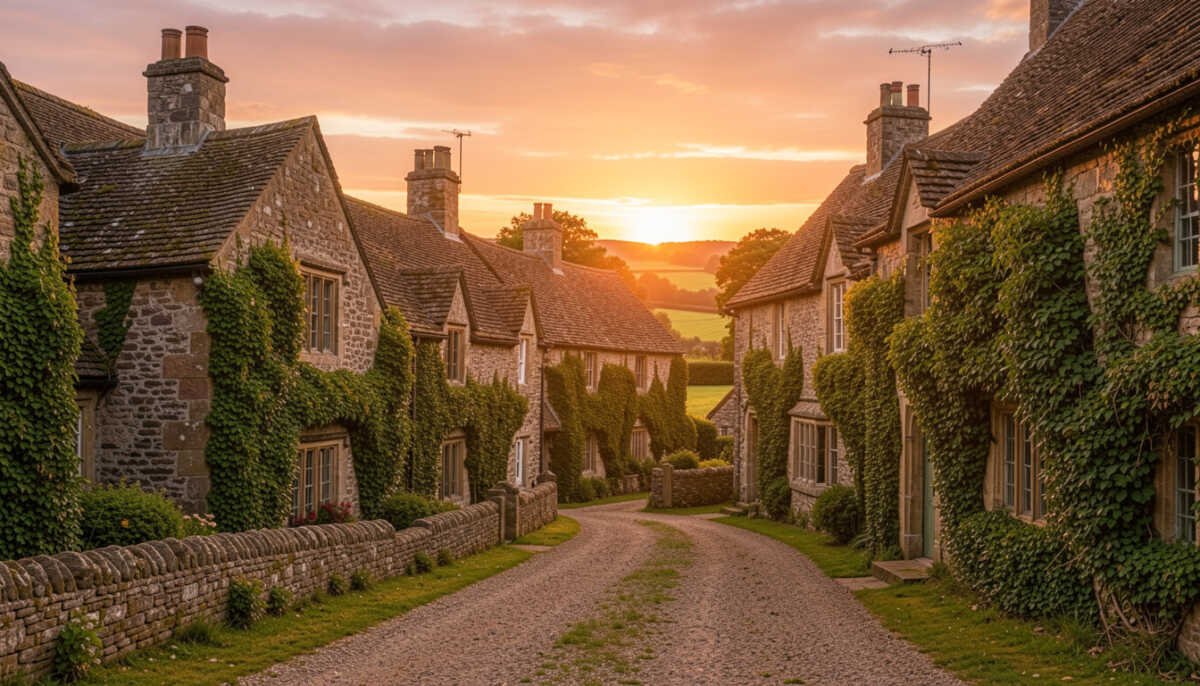
England is famous for its historic cities, beautiful countryside, and charming villages. Some villages feel like they have been taken straight from a storybook, with old stone cottages, narrow lanes, peaceful rivers, and green hills surrounding them. If you are planning an England trip and want to experience a quieter side of the country, these three villages are excellent places to add to your itinerary. They each have a different personality, so whether you love photography, history, walking, or simply relaxing somewhere beautiful, there is something here for you.
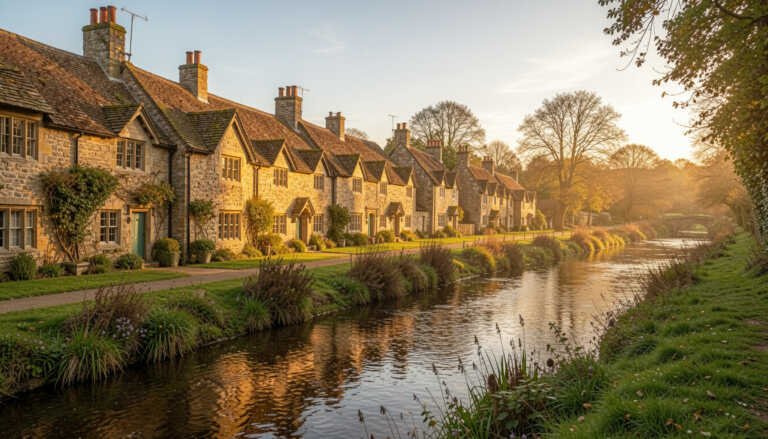
If you have seen photographs of the English countryside, there is a good chance you have already seen Bibury. Located in the Cotswolds, Bibury is particularly famous for its honey-coloured stone cottages and the peaceful River Coln.
The village has long been associated with the description “the most beautiful village in England,” a phrase linked to the Victorian designer and writer William Morris. One of its most recognisable sights is Arlington Row, a historic collection of cottages beside the river. The National Trust notes that the buildings began as a monastic wool store in the 14th century before later becoming weavers’ cottages.
The beauty of Bibury comes from its simple details. Stone cottages, small gardens, flowing water, and surrounding countryside create a scene that feels distinctly English.
You can walk around the village, explore the area around the River Coln, and visit nearby attractions such as Bibury Trout Farm. The village is compact, so you do not need an entire day to see its main sights.
Bibury can become busy because of its popularity. Early morning or later in the afternoon can be a more relaxed choice, particularly during the busier months. Spring and autumn are also lovely times to see the surrounding countryside.
- First-time visitors to the Cotswolds
- Photography lovers
- Couples and families
- People interested in historic architecture
- Travellers looking for a classic English village
- My tip: Don’t spend your whole visit photographing Arlington Row. Walk a little farther and take time to appreciate the river, countryside, and quieter corners of the village.
2. Castle Combe, Wiltshire
Castle Combe is another Cotswold village that regularly appears on lists of England’s prettiest places. It sits in a wooded valley in Wiltshire, where traditional honey-coloured stone cottages line narrow streets beside the By Brook.
The village has a fascinating history. According to its official visitor website, the area has connections stretching from an ancient British hill fort and Roman occupation to the medieval wool industry. Many of the historic buildings have been carefully preserved.
One of the nicest ways to experience Castle Combe is simply to walk through the village without rushing. The Market Cross, St Andrew’s Church, stone cottages, and small bridge over the stream are among the sights worth seeing.
Castle Combe is mainly about atmosphere rather than a long list of attractions.
You can:
- Walk through the historic village centre
- Photograph the traditional stone cottages
- Visit St Andrew’s Church
- Explore nearby countryside and walking routes
- Enjoy food or a drink at a local pub
- Use the village as a base for exploring the wider Cotswolds
- The official Castle Combe visitor information also recommends exploring beyond the main street, including nearby countryside, footpaths, Lacock, and Biddestone.
A Useful Tip for Visitors
- Castle Combe is a real residential village, not an outdoor museum. Its centre is very small, and parking can become difficult during busy periods. Visitors are encouraged to use the designated car park rather than trying to park along the narrow village streets.
- Visiting early in the morning or later in the afternoon can make the experience much more peaceful.
Why Visit Castle Combe?
- If Bibury gives you the classic Cotswold postcard, Castle Combe gives you the feeling of stepping into an old English village where the historic surroundings have remained remarkably intact.
3. Grasmere, Cumbria
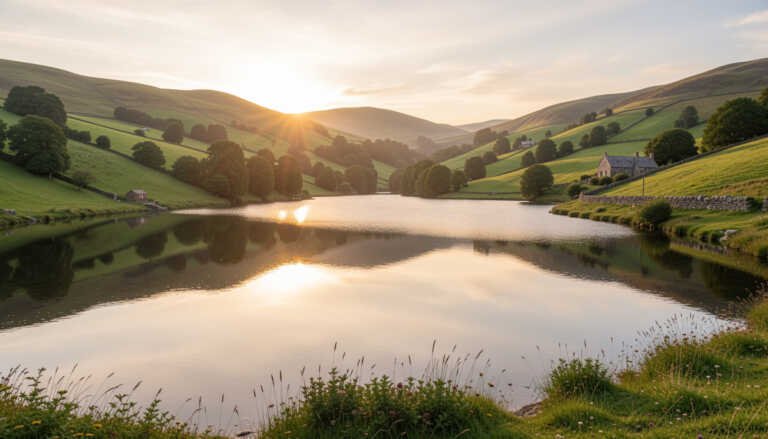
For dramatic scenery, Grasmere offers something completely different from the Cotswold villages.
Located in the heart of the Lake District, Grasmere is surrounded by mountains, woodland, meadows, and the beautiful Grasmere lake. The village itself has traditional cottages, slate-roofed buildings, shops, cafés, and historic sites.
The Lake District National Park describes Grasmere as a village nestled beneath spectacular fells and highlights its lake, walking routes, Wordsworth connections, and famous Grasmere Gingerbread.
The biggest attraction here is the landscape.
Instead of simply looking at pretty cottages, you can combine a village visit with a walk beside the lake or through the surrounding countryside. The area also has a strong literary connection because William Wordsworth lived in the area and is buried at St Oswald’s Church in Grasmere.
Dove Cottage, where Wordsworth lived, is another important attraction for visitors interested in English literature and local history.
During a visit, you can:
- Walk around Grasmere village
- Explore the shores of Grasmere lake
- Visit Dove Cottage and learn about Wordsworth
- See St Oswald’s Church
- Visit Allan Bank
- Browse independent shops and galleries
- Try the famous Grasmere Gingerbread
- Explore walking routes around the surrounding countryside
Getting Around Grasmere
- Grasmere is also a good choice if you would rather not rely completely on a car. The Lake District National Park lists bus services connecting Grasmere with places including Windermere, Ambleside, Lancaster, and Keswick.
- For walkers, there are routes around the village, lake, and surrounding landscape. If you prefer an easier walk, look for the area’s accessible “Miles without Stiles” routes.
4. Broadway, Worcestershire
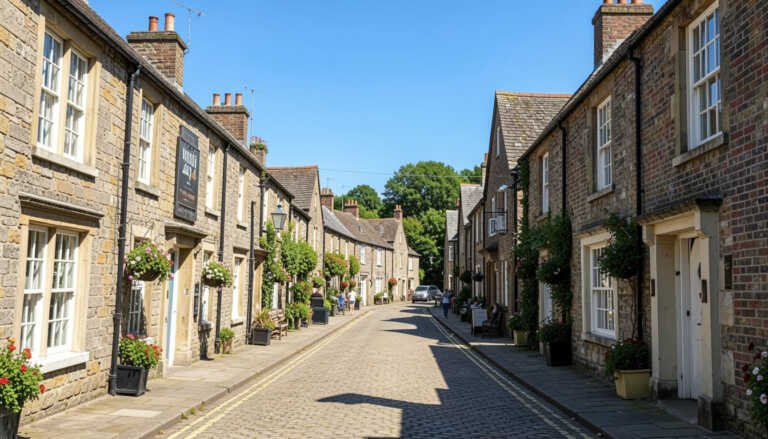
being somewhere special. Located at the foot of the Cotswold escarpment in Worcestershire, it is known for its wide, tree-lined High Street, honey-coloured stone buildings, historic inns, shops, galleries, and relaxed countryside atmosphere.
The official Cotswolds tourism site describes Broadway as the “Jewel of the Cotswolds” and highlights its historic buildings, scenic walks, cultural attractions, and restaurants.
The village has a slightly different character from smaller Cotswold villages. Instead of only a few cottages around a tiny centre, Broadway has a long and attractive High Street where you can comfortably spend several hours.
The honey-coloured buildings look particularly beautiful against the greenery of the surrounding countryside. In warmer months, the trees along the High Street add another layer of colour to the village.
Another major attraction is Broadway Tower, which sits on the nearby hill above the village. From the surrounding area, visitors can enjoy wide views across the Cotswold countryside.
There is plenty to do beyond taking photographs.
You can:
- Walk along the historic High Street
- Visit independent shops and galleries
- Explore Broadway Museum and Art Gallery
- Walk towards Broadway Tower
- Enjoy afternoon tea or a meal
- Explore nearby countryside trails
- Use Broadway as a base for visiting other Cotswold villages
- Broadway is also considered a convenient choice for visitors who want more restaurants, accommodation, and things to do in one place.
Best Time to Visit
- Spring and autumn can be especially pleasant if you prefer a quieter atmosphere. Summer is lively but can also be busy. The local tourism information notes that spring, autumn, and winter generally offer a more relaxed experience, while summer brings more visitors.
- Best for: Walkers, photographers, couples, food lovers, and first-time Cotswolds visitors.
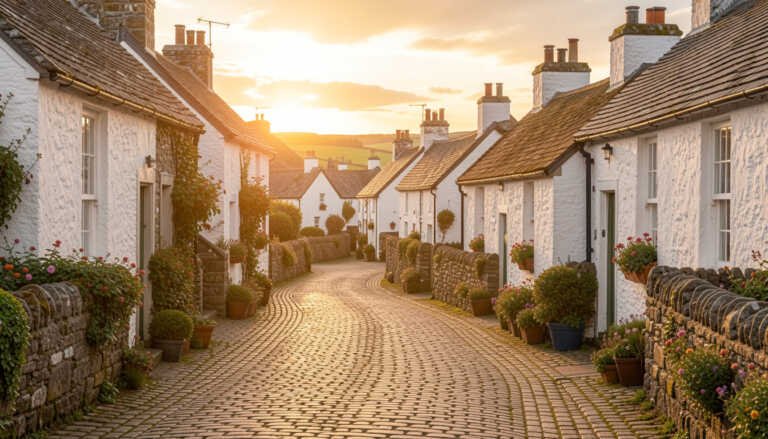
If you want to see a different side of England’s village scenery, head north to Hawkshead in the Lake District.
Hawkshead is surrounded by some of England’s most impressive natural scenery. The village itself has cobbled streets, small courtyards, whitewashed cottages, and traditional buildings, while the surrounding countryside offers hills, forests, lakes, and walking routes.
Visit Lake District describes Hawkshead as a picturesque village in the heart of the Lake District, with historic connections to William Wordsworth and Beatrix Potter.
What I like about Hawkshead is that the village and landscape work together. You can spend time exploring the historic streets and then head into the surrounding countryside for a walk.
The village has a long history as a medieval market settlement. Its historic character can still be seen in the buildings, courtyards, and narrow streets.
There is also a literary connection. William Wordsworth attended the former grammar school in Hawkshead, while Beatrix Potter lived nearby at Hill Top.
During your visit, consider:
- Exploring the cobbled village streets
- Visiting the historic church
- Learning about Wordsworth’s connection with the village
- Exploring independent shops
- Enjoying a meal at a traditional pub
- Walking in the surrounding countryside
- Visiting nearby Lake Windermere
- Exploring the landscapes around Coniston and Grizedale
- The official Lake District visitor guide also highlights walking, cycling, and nearby water activities.
Best Time to Visit
- Summer is excellent for exploring the surrounding countryside because of the longer daylight hours. Spring and autumn are also attractive if you want to enjoy the changing landscape.
- If you plan to walk, always check the weather and choose a route appropriate for your experience.
- Best for: Nature lovers, walkers, photographers, history enthusiasts, and families.
6. Bourton-on-the-Water, Gloucestershire
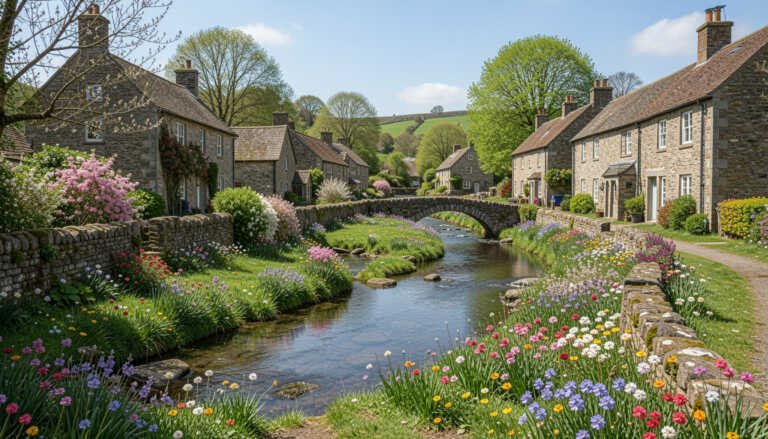
Bourton-on-the-Water is one of the most recognisable villages in the Cotswolds. The village sits beside the River Windrush, with attractive stone bridges crossing the water and traditional Cotswold buildings lining the streets.
It is sometimes nicknamed the “Venice of the Cotswolds” because of the river and its series of small bridges.
The river is the main reason the village feels different from many other Cotswold destinations.
Instead of simply walking along a traditional village street, visitors can stroll beside the water, cross small stone bridges, stop at cafés, and enjoy views of the surrounding buildings.
The village is also a practical choice for families because there are several attractions in and around the centre.
Some popular activities include:
- Walking beside the River Windrush
- Photographing the stone bridges
- Exploring independent shops
- Visiting local museums and attractions
- Enjoying cafés and traditional food
- Exploring the surrounding Cotswold countryside
- Visiting nearby villages such as Lower Slaughter
- Bourton-on-the-Water is particularly useful for travellers who want a village with more facilities rather than a tiny settlement where everything closes early.
Is Bourton-on-the-Water Crowded?
Yes, it can be.
- Its beauty and accessibility make it one of the more popular Cotswold stops. If you want a calmer experience, consider arriving earlier in the day or visiting outside the busiest summer periods.
- This is one of those places where timing can make a big difference. A quiet morning beside the river can feel completely different from a busy afternoon.
Best Time to Visit
- Spring and early autumn are good choices if you want pleasant countryside scenery without relying entirely on the busiest summer period. Summer offers longer days but generally brings more visitors.
- Best for: Families, first-time Cotswolds visitors, photographers, couples, and travellers who want cafés, shops, and attractions close together.
7. Lacock, Wiltshire
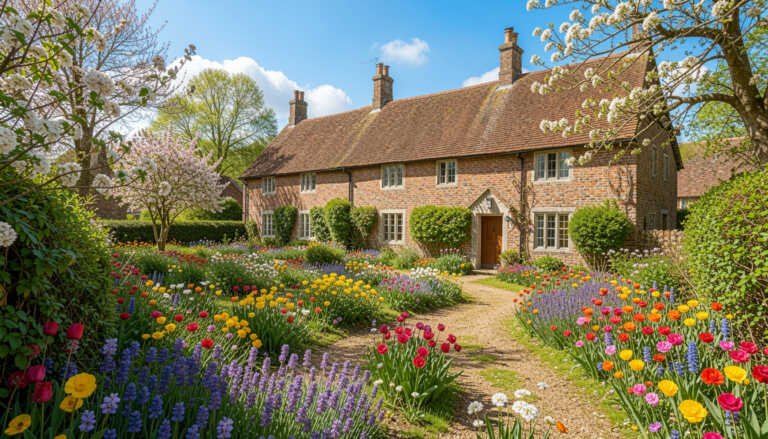
Lacock is one of England’s most charming historic villages, and it feels remarkably well preserved. Located in Wiltshire near Chippenham, Lacock is known for its traditional stone and timber-framed buildings, quiet lanes, and strong connection with English history.
Much of the village is owned and cared for by the National Trust, which has helped preserve its historic character. Lacock Abbey, located within the village, was founded in the 13th century and later became the home of William Henry Fox Talbot, an important pioneer of photography.
Lacock’s biggest attraction is its atmosphere. Walking through the village can feel like stepping into another period of English history.
There are very few modern-looking buildings in the historic centre, which helps explain why the village has been used as a filming location for productions including Harry Potter and Downton Abbey.
During your visit, you can:
- Explore the historic village streets
- Visit Lacock Abbey
- Learn about William Henry Fox Talbot
- Explore the Fox Talbot Museum
- Photograph traditional cottages
- Walk through the surrounding countryside
- Enjoy food and drinks at local establishments
- Best for: History lovers, photographers, film fans, and travellers who enjoy traditional English architecture.
8. Lower Slaughter, Gloucestershire
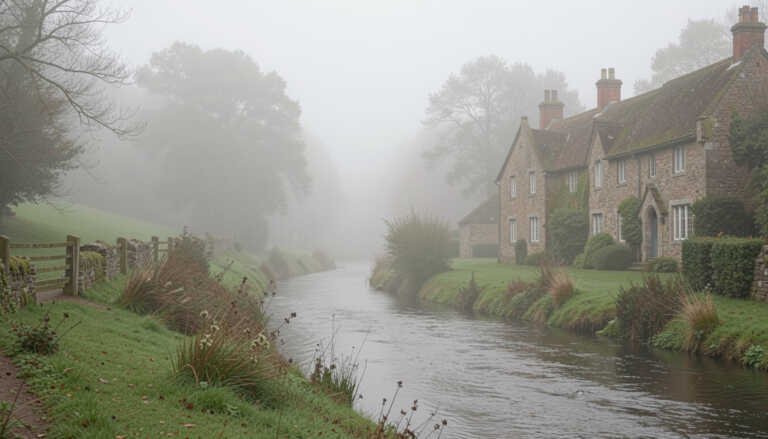
Lower Slaughter is a small Cotswold village that proves you do not need a large collection of attractions to create a memorable travel experience.
The village is built around the River Eye, with traditional stone cottages, a small stone footbridge, and historic buildings creating a peaceful countryside setting.
The name may sound unusual, but there is nothing unpleasant about the village itself. “Slaughter” comes from an old English word connected with a muddy place, rather than anything to do with violence.
The River Eye is the heart of the village. Walking beside the water gives you views of traditional cottages and greenery, while the small bridges add to the postcard-like scenery.
One of the notable historic buildings is The Old Mill, which dates back to the 19th century and reflects the village’s connection with milling. The wider Cotswolds area also recognises Lower Slaughter for its historic character and scenic setting.
Lower Slaughter is best enjoyed slowly.
You can:
- Walk along the River Eye
- Photograph the historic cottages
- Visit The Old Mill
- Explore the village on foot
- Walk between Lower and Upper Slaughter
- Enjoy the surrounding Cotswold countryside
- Because the village is small, you can see its main sights relatively quickly. The real pleasure comes from taking your time rather than rushing from one attraction to another.
- Best for: Couples, photographers, walkers, and travellers looking for a peaceful village escape.
9. Rye, East Sussex
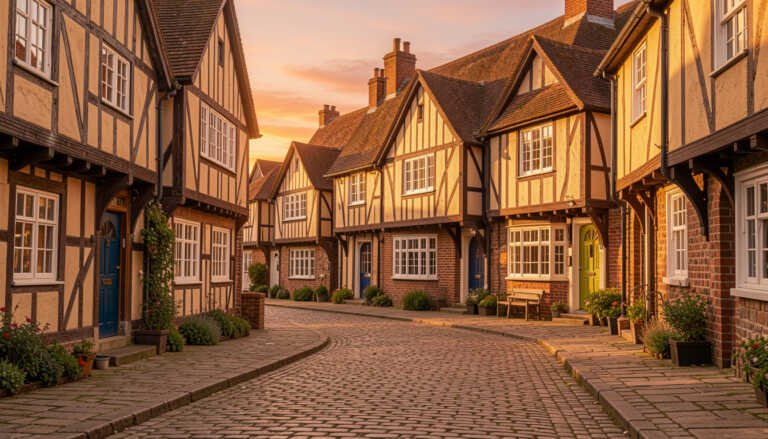
Rye is slightly different from the tiny villages on this list, but its historic character makes it well worth including in an England countryside itinerary.
Located in East Sussex, Rye is famous for its cobbled streets, medieval buildings, independent shops, historic inns, and beautiful views across the surrounding countryside.
The town has a fascinating maritime history. Rye was once surrounded by water and played an important role in the Cinque Ports, a historic group of coastal towns in southeast England.
Rye is particularly attractive if you want somewhere that combines village-like charm with more things to see and do.
One of its most photographed streets is Mermaid Street, where timber-framed buildings and cobblestones create a classic old-English atmosphere.
You can also visit St Mary’s Church, explore the historic town centre, and climb the church tower for views across Rye and the surrounding countryside.
A day in Rye could include:
- Walking along Mermaid Street
- Exploring the historic town centre
- Visiting St Mary’s Church
- Browsing independent shops
- Exploring local cafés and restaurants
- Visiting Rye Castle Museum
- Taking a short trip to nearby Rye Harbour
- Exploring the surrounding Sussex countryside
Best Time to Visit Rye
- Rye is enjoyable throughout much of the year. Spring and summer are popular because of the pleasant weather and longer days, while autumn can bring a quieter atmosphere and beautiful colours.
- If you want to combine Rye with a coastal trip, nearby Camber Sands and Rye Harbour make excellent additions to your itinerary.
- Best for: History lovers, photographers, couples, shoppers, and travellers who want a historic town with plenty to explore.
10. Castleton, Derbyshire
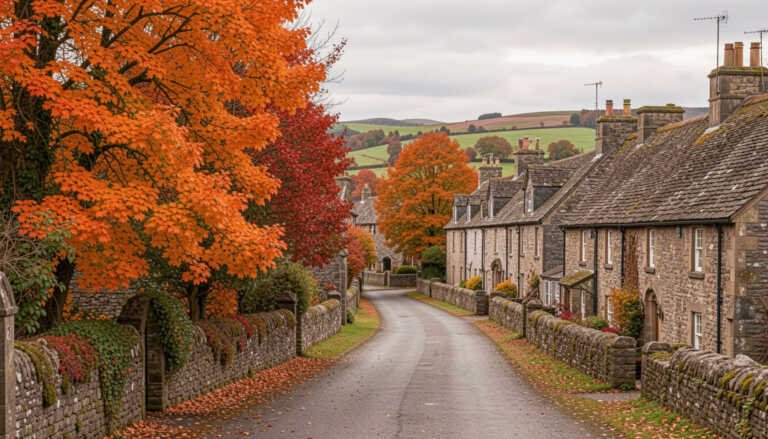
If you want to experience a beautiful English village surrounded by dramatic countryside, Castleton in Derbyshire is an excellent choice. Located in the heart of the Peak District National Park, Castleton combines traditional stone cottages with hills, valleys, walking trails, and historic attractions.
Unlike some of the smaller Cotswold villages, Castleton has a more rugged landscape. The surrounding hills make it particularly attractive for travellers who enjoy outdoor adventures as much as village sightseeing.
Castleton sits in the Hope Valley and is surrounded by some of the Peak District’s most impressive scenery. The village is also famous for its historic connection with Blue John stone, a rare mineral found in the nearby hills.
Above the village are the remains of Peveril Castle, a Norman castle offering impressive views over the valley. English Heritage describes Peveril Castle as one of England’s earliest Norman fortresses and highlights its commanding position above Castleton.
There is plenty to keep visitors busy:
- Walk through the historic village centre
- Visit Peveril Castle
- Explore the Peak District countryside
- Discover the area’s famous Blue John stone
- Visit nearby caves
- Enjoy traditional food in local cafés and pubs
- Take a walking route towards Mam Tor
- Photograph the surrounding Hope Valley
Best Time to Visit
- Spring and summer are popular for walking and outdoor activities because of the longer daylight hours. Autumn can be particularly beautiful when the surrounding vegetation changes colour.
- Winter can be peaceful, but the Peak District weather can change quickly, so anyone planning a countryside walk should check the forecast and choose a suitable route.
Why Castleton Belongs on This List
- Castleton offers something different from the classic honey-coloured Cotswold villages. Here, the beauty comes from the combination of traditional stone buildings and dramatic Peak District landscapes.
- If you want a village where you can spend the morning exploring historic streets and the afternoon walking through spectacular countryside, Castleton is a strong choice.
- Best for: Hikers, nature lovers, photographers, history enthusiasts, and adventurous travellers.
Final Thoughts
England is full of beautiful villages, each offering something different. From the honey-coloured cottages of Bibury and Castle Combe to the dramatic scenery around Castleton, these places are perfect for slowing down and enjoying England’s countryside. The Cotswolds in particular are known for their historic villages, rolling landscapes, and scenic walking routes.
Frequently Asked Questions (FAQ)
What is the most beautiful village in England?
- There is no official answer, but Bibury, Castle Combe, and Castleton are all excellent choices for scenery and character.
Which English village is best for photography?
- Bibury is a popular choice because of its famous Arlington Row and riverside setting.
What is the best time to visit English villages?
- Spring and early autumn are great for pleasant weather, beautiful scenery, and countryside walks.
Can I visit these villages without a car?
- Yes. Some villages can be reached by public transport, although planning is important because services vary between rural areas.
How many villages can I visit in one day?
- For a relaxed trip, two or three villages is usually a better choice than trying to visit too many in one day.

I am Sabiq Hasan Rasel. Coffee with Travel, Recipes & Reviews is a cozy and engaging content space that blends a love of coffee with exciting travel experiences, delicious recipes, and honest reviews. It offers inspiration for coffee lovers who enjoy exploring new places, trying unique flavors, and discovering lifestyle tips along the way.